


Imagine this: An HR manager is handling multiple priorities—talent shortages, managing compliance updates, and trying to boost employee engagement—all while keeping up with evolving workplace trends. With digital transformation, new labor laws, and shifting employee expectations, HR is no longer just about hiring and payroll; it’s a strategic function shaping organizational success.
Yet, challenges persist despite advanced tools like AI-driven recruitment platforms and cloud-based HR systems. From retaining top talent to fostering a strong company culture, HR managers face growing complexities that demand innovative solutions.
This blog explores the top HR challenges in 2026 and offers actionable strategies to overcome them, including how UpRaise can help streamline HR processes for better outcomes.
What are the biggest HR challenges in 2026?
The role of HR has transformed beyond traditional hiring and payroll functions. It now encompasses strategic decision-making, employee well-being and data-driven workforce management. However, with these expanded responsibilities come significant HR management issues.
Let’s take a deep dive into HR challenges and explore ways to overcome them effectively.
1. Employee retention and engagement issues
Employees are no longer just looking for competitive salaries; they want more out of the fast-paced job market. They seek meaningful work, growth opportunities and a positive workplace culture. According to a LinkedIn survey of 31,000 individuals across 31 countries, 46% of employees globally are planning to leave their jobs, with a staggering 85% of US professionals considering a new job.
Example: A leading IT firm faced a high annual attrition rate despite offering high salaries. Upon conducting an internal survey, they discovered that employees felt undervalued and lacked growth opportunities. After implementing a structured feedback and recognition system, the turnover rate dropped significantly.
How to overcome it:
- Implement continuous feedback and recognition: Tools like UpRaise for Employee Success help organizations create a workplace culture of continuous feedback, ensuring employees feel valued and motivated.
- Career development plans: Provide employees with clear growth paths, mentorship programs and skill development opportunities.
- Foster a positive work culture: Encourage open communication, work-life balance and employee well-being programs to boost retention.
2. Recruitment and talent acquisition struggles
With skill gaps widening and competition for top talent increasing, HR teams struggle to attract and retain the right candidates. 76% of hiring managers say that finding qualified candidates is their biggest challenge.
Example: A fintech company needed AI engineers but faced a shortage of qualified candidates. By leveraging AI-driven recruitment tools and employer branding strategies, they attracted top talent and reduced their hiring time as well.
How to overcome it:
- Leverage AI and data-driven hiring: Platforms like UpRaise help streamline recruitment by analyzing employee competencies and suggesting best-fit candidates.
- Strengthen employer branding: Showcase company culture through employee testimonials, LinkedIn engagement and workplace reviews.
- Expand talent pools: Consider remote hiring, internship programs and partnerships with universities to tap into emerging talent.
3. Managing remote and hybrid workforces
The rise of remote and hybrid work has created new challenges in team collaboration, employee engagement and productivity tracking. A Microsoft Work Trend Index found that 56% of employees feel disconnected in remote work settings.
Example: A multinational company struggled with miscommunication and declining productivity in hybrid teams. By implementing structured check-ins, virtual engagement tools and clear performance tracking, they improved team cohesion and efficiency.
How to overcome it:
- Set clear communication guidelines: Encourage regular team meetings, define expectations and use collaboration tools effectively.
- Use performance management solutions: UpRaise for Employee Success offers real-time performance tracking, helping managers keep employees aligned with goals.
- Foster a virtual culture: Organize online team-building activities, promote transparency and recognize remote employees’ contributions.
4. HR technology and data management challenges
With the growing reliance on HR software, many organizations struggle with tool integration, data security and user adoption. PwC’s HR Tech Survey (2023) states that 49% of HR leaders say that they will invest in new technologies. This implies an increased focus on tool integration and user adoption, which can lead to various HR challenges.
Example: A large-scale enterprise used multiple HR tools that didn’t sync well, leading to inconsistent data and inefficiencies. After shifting to an integrated HR platform, they reduced administrative costs considerably.
How to overcome it:
- Invest in all-in-one HR solutions: Utilize software like UpRaise for Employee Success, which helps organizations centralize feedback, performance tracking and goal-setting.
- Ensure seamless integration: Choose platforms that easily integrate with existing HR software to maintain data consistency.
- Prioritize HR analytics: Use data-driven insights to make strategic HR decisions and optimize workforce management.
By addressing human resource problems, organisations can lay a strong foundation for overall HR efficiency. Now, let’s explore broader solutions to tackle key HR challenges and drive long-term success.
How to overcome HR challenges
HR challenges may seem overwhelming, but with the right approach and tools, organizations can turn these obstacles into opportunities for growth. From improving engagement and retention to streamlining recruitment and remote workforce management, HR teams must adopt innovative solutions to stay ahead in a rapidly evolving workplace. Let’s look at some use cases and examples of how modern technology can help overcome HR issues:
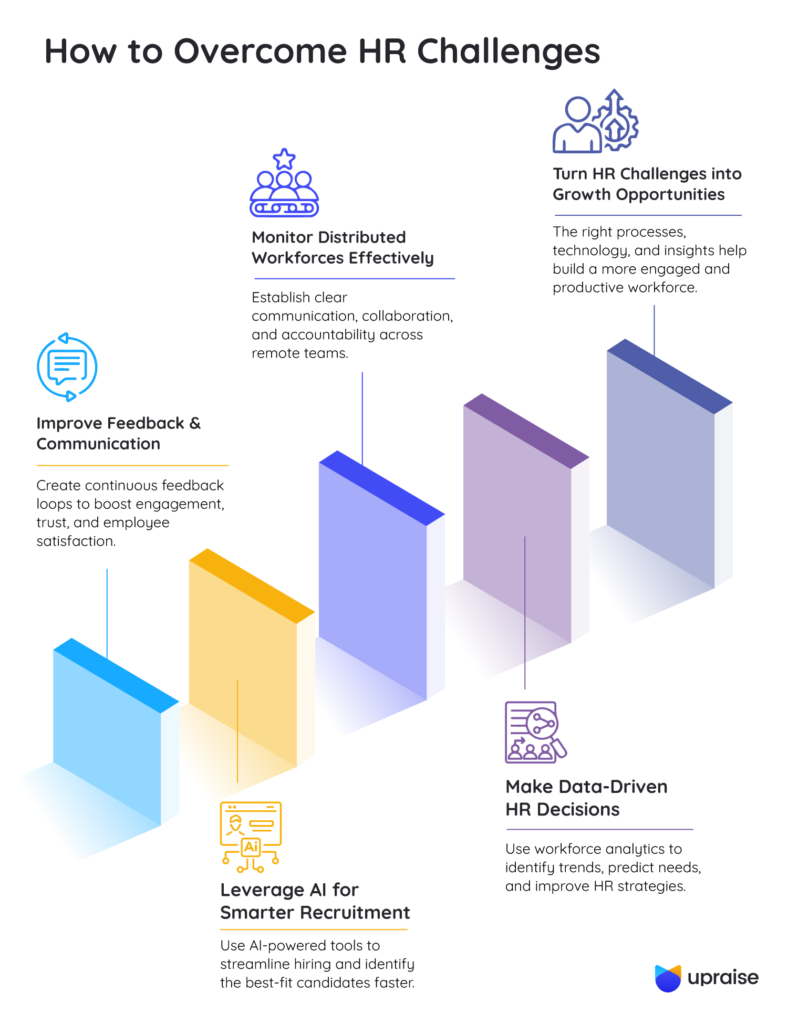
Improve feedback and communication channels:
Imagine a fast-growing tech company struggling with high employee turnover and low morale. Employees feel undervalued, and the lack of feedback leads to disengagement. By implementing UpRaise, the company introduces a real-time feedback system where managers and peers recognize contributions instantly. Over time, regular recognition fosters a culture of appreciation, improving employee satisfaction and reducing attrition rates.
Leverage AI-based tools for recruitment:
Hiring and retaining top talent requires a strategic approach. Leveraging AI-based recruitment tools helps streamline candidate screening, reduce bias, and improve hiring efficiency. Promoting a strong company culture through employer branding, employee testimonials, and workplace benefits attracts high-quality candidates.
Monitor distributed workforces:
Managing a remote workforce requires structured communication, collaboration and accountability. Establishing clear guidelines for virtual meetings, performance tracking and task delegation helps ensure productivity. Utilizing collaboration tools like Slack, Jira, Microsoft Teams, Upraise and Asana enhances team coordination and project management.
Make data-driven HR decisions:
HR analytics is crucial in optimizing workforce planning and decision-making. By analyzing data-driven insights, organizations can identify trends in employee performance, turnover rates and productivity levels. Predictive analytics helps anticipate workforce needs, enabling HR teams to make proactive decisions about hiring, training and resource allocation. Implementing HR dashboards and automated reporting tools ensures that data-driven strategies enhance efficiency.
By addressing these challenges proactively, HR teams can foster a more engaged, productive and satisfied workforce.
Conclusion
Solving human resource problems in 2026 is more than just people management – it’s about driving organizational success through strategic decision-making, technology adoption and employee-centric policies. By recognizing and overcoming common HR challenges, companies can build resilient workforces that are ready for the future.
With UpRaise for Employee Success, HR teams gain a powerful ally in managing employee performance, engagement and goal alignment—ensuring that organizations remain competitive in today’s dynamic work environment.
Are you ready to overcome your HR challenges? Book a free demo to explore how UpRaise can help your organization overcome challenges and build a thriving workplace.
FAQs
1. How has remote work affected HR challenges?
Remote work has increased challenges in team collaboration, employee engagement and productivity tracking. HR teams need structured communication, performance management tools and engagement initiatives to address these issues effectively.
2. What is the role of HR in diversity and inclusion?
HR is responsible for embedding diversity and inclusion into company culture by enforcing unbiased hiring, conducting sensitivity training, and establishing policies that support equal opportunities. They also create safe spaces where employees from diverse backgrounds feel valued, heard, and empowered to contribute.
3. How does employee engagement impact business success?
Employee engagement drives higher productivity, retention, and innovation, directly influencing company performance. Various researches show that businesses with highly engaged employees see increased profitability, better customer satisfaction, and lower turnover rates.
4. How can HR use technology to simplify processes?
HR technology streamlines recruitment, performance tracking and data management, making HR functions more efficient. Platforms like UpRaise help automate feedback, goal setting and employee recognition.


