


“Everyone’s doing their job, but no one seems excited about it.” As a manager, has this thought ever crossed your mind? This happens when you see your team log in on time, meet deadlines, and still feel disconnected. The truth is, even the best workflows fall short without strong employee engagement strategies.
And this isn’t just about morale. According to a 2024 Gallup report, if the global workforce were fully engaged, the economy would gain $9.6 trillion in productivity.
So the question isn’t whether to focus on engagement, but how. In this blog, we’ll break down why engagement matters, what works (and what doesn’t), and how to build impressive employee engagement strategies that can be implemented smoothly.
We’ll also explore how managers can make this process easier to execute using centralized tools that support continuous performance conversations and feedback.
Why is employee engagement important?
A disengaged developer can still close tickets because productivity alone isn’t a sign of a healthy team. A checked-out marketer can still publish a campaign. But without real engagement, their work rarely reaches its full potential.
There are several benefits of employee engagement programs — they boost motivation, shape how teams communicate, collaborate, and innovate. Engaged employees are more likely to take ownership, speak up in retros, and contribute beyond the bare minimum. For Agile teams, especially, where adaptability and feedback loops drive momentum, engagement becomes the fuel that keeps the sprint engine running.
According to a Gallup meta-analysis, businesses with highly engaged teams see 23% higher profitability and 18% higher productivity.
Simply put: when employees care, they don’t work — they build. They help shape better products, stronger teams, and a culture that can sustain high performance over time.
Key components of employee engagement
Employee engagement strategies often fall flat because they miss what actually matters to people. It’s not about flashy perks or once-a-year surveys. It’s about what work feels like every day. Are employees motivated when they start their day? Do they feel appreciated after contributing to a project? Can they see themselves growing in their current role? That daily experience is what shapes real engagement.
Here are the key components every manager should focus on:
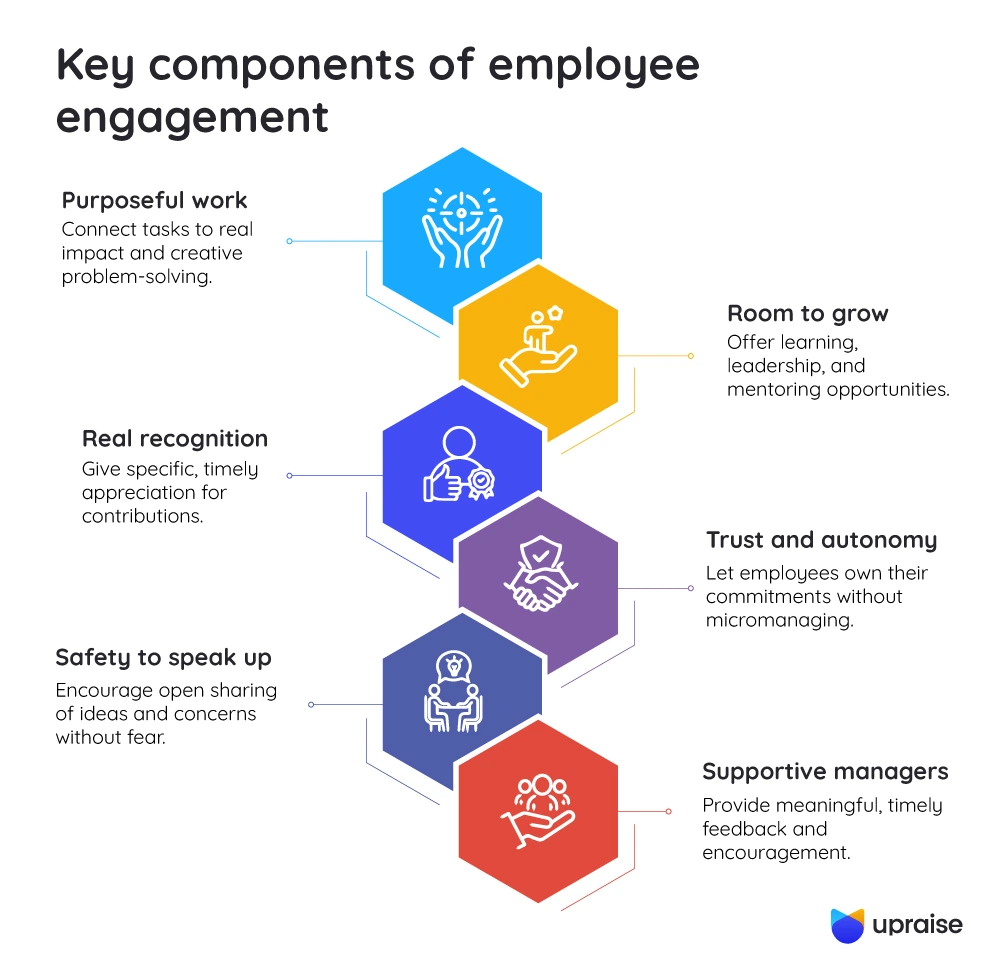
1. Purposeful work
People want to know they aren’t wasting their time just ticking off tasks. When sprint goals clearly connect to real customer outcomes or when a user story challenges them to think creatively, their work gains meaning beyond just completing tasks.
2. Room to grow
Growth doesn’t always mean a promotion. It could mean picking up a new tool, leading a backlog grooming session, or mentoring a junior. That sense of motion? It keeps energy high.
3. Recognition that Feels Real
A quick Slack message, a shoutout in stand-up, or a thank-you in a retro—it all counts. One of the simplest employee engagement tips for managers is to make appreciation specific and timely.
4. Trust and Autonomy
Micromanagement is a fast track to disengagement. When people are trusted to manage their sprint commitments, it builds ownership, and that shows up in the quality of work.
5. Safety to Speak Up
Can someone flag a blocker without fear? Suggest a new tool without being dismissed? That’s psychological safety, and it’s the bedrock of innovation on any team.
6. Manager support that lands
According to a Gallup report, 28% of employees say the most memorable recognition they’ve received came from their direct manager, more than from CEOs, peers, or even customers.
A simple, well-timed “great work on that sprint delivery” by the manager can stick with employees far longer than a formal reward.
If you’re serious about learning how to improve employee engagement, don’t underestimate the power of all these components.
How to build an effective employee engagement strategy
An effective employee engagement strategy isn’t a one-size-fits-all solution. It requires intention, consistency, and the right tools to support everyday performance.
Here’s how to build one that works:
1. Start with real conversations, not assumptions
Before solving the engagement puzzle, you need honest input. Regular feedback loops – through quick check-ins, pulse surveys, or structured forms – help uncover issues that may not surface in day-to-day conversations.
2. Map out the moments that matter
From onboarding to milestone check-ins, some moments shape the employee experience more than others. Identify these in advance so they can be handled intentionally, rather than reactively. Use consistent processes to capture key insights at each stage of the employee journey and ensure they feed into future improvements.
3. Set clear goals and involve the team
Engagement improves when people know what they’re working toward – and when they’re part of defining those goals. Use a structured goal-setting framework (such as OKRs or KPIs) to link individual and team objectives to broader business outcomes, and make progress visible to everyone involved.
4. Weave feedback into the workflow
Feedback should be a natural part of the work rhythm, not a disruption. It needs to be timely, specific, and connected to actual tasks or projects. Incorporate peer-to-peer recognition, manager feedback, and 360° reviews into the regular cadence of work so they become habits rather than events.
5. Use tools that support performance conversations
Performance discussions are more impactful when they happen regularly and are supported by clear data. Use systems that bring together goals, feedback, and progress tracking in one place, with options for customizable review cycles and structured 1:1 check-ins.
6. Keep evolving based on what you learn
An employee engagement strategy is never “done.” Review the data regularly – from feedback trends to goal completion rates – and adapt your approach based on what’s working. This prevents stagnation and keeps the strategy relevant to the team’s changing needs.
Best practices for boosting employee engagement
If you’re wondering how to improve employee engagement day to day, these are the practices worth adopting:
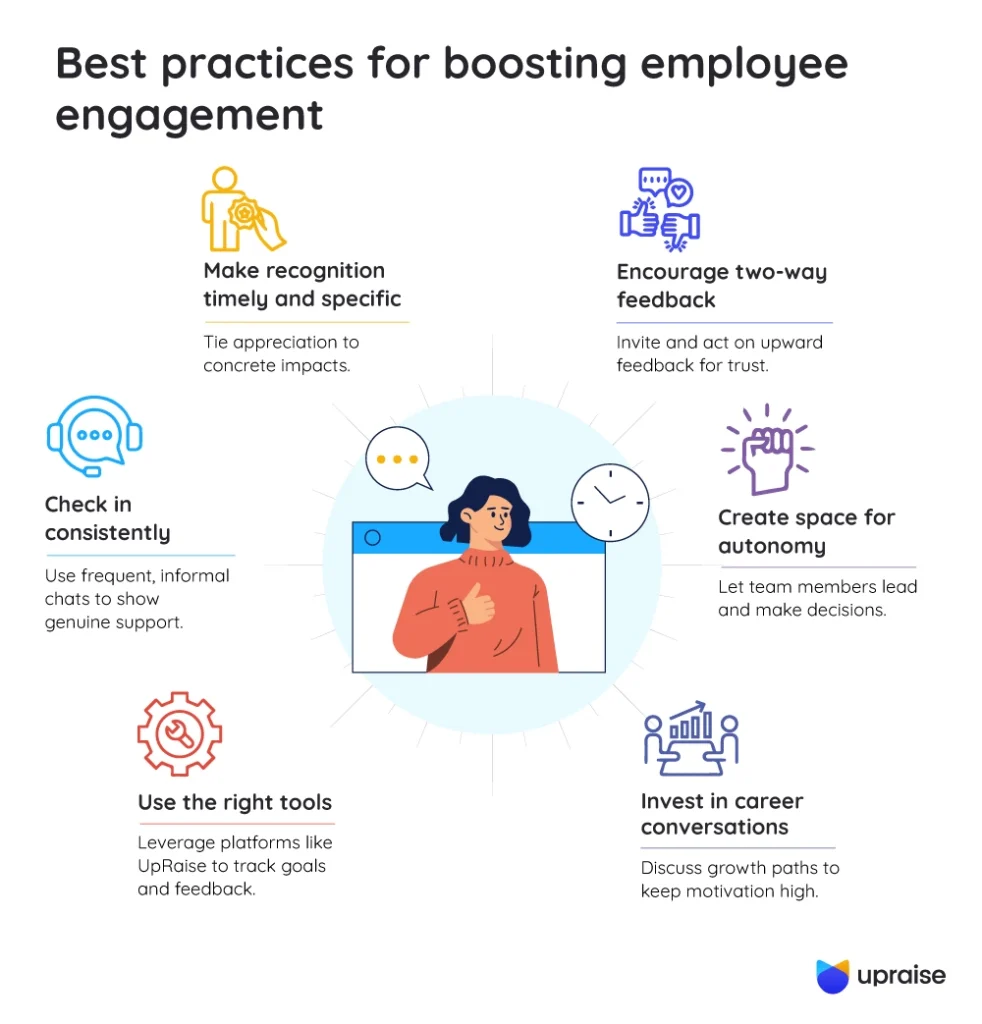
1. Check in consistently
Frequent, informal check-ins help employees feel seen and supported. It shows you care about progress, not just output.
Tip: Don’t wait for formal reviews. Use stand-ups or post-sprint chats to ask how someone’s feeling about their workload or growth.
2. Make recognition timely and specific
“Good job” is forgettable. But “Your bug fix saved us from a major release delay — thank you” shows real appreciation.
Tip: Use sprint retros or demo days as natural moments to give shoutouts tied to real impact.
3. Encourage two-way feedback
Managers don’t always have full visibility. Invite upward feedback — and act on it. That trust goes a long way.
Tip: Ask, “What’s one thing I could do differently to support you better?” in your next 1:1.
4. Create space for autonomy
Micromanagement kills momentum. Let team members take the lead on planning their work, experimenting with tools, or running sprint ceremonies.
Tip: Rotate ownership of stand-ups or retros to build confidence and give everyone a voice.
5. Invest in career conversations
Employees want to know where they’re heading. Even if a promotion isn’t right around the corner, a conversation about growth keeps motivation high.
Tip: Ask, “What skills do you want to develop over the next quarter?” and help them tie that to current sprint work.
6. Use the right tools to support these habits
Even the best managers need help keeping track of conversations, feedback, and goals.
Tip: Use all-in-one tools like UpRaise. With 1:1 templates, OKR progress tracking, and continuous feedback tools, UpRaise makes it easier to turn these best practices into daily rituals.
Measuring employee engagement success
Employee engagement strategies are measurable, and here’s how to track whether your efforts are making a real difference:
1. Look at behaviour, not just sentiment
Pulse surveys are helpful, but don’t stop there. Watch for shifts in behaviour, like increased participation in retros or higher completion rates on sprint goals.
If you’re applying employee engagement tips for managers, like giving regular feedback or opening space for team ownership, look for signs that employees are more involved and vocal in Agile rituals.
2. Track retention, productivity, and peer feedback
Engaged teams stay longer, deliver more consistently, and help each other grow. Look at trends in:
- Team retention rates
- Sprint velocity and backlog progress
- Peer-to-peer feedback quality
Together, they reflect the benefits of employee engagement programs in action.
3. Tie engagement to business outcomes
Look at how engagement connects to broader outcomes like customer satisfaction, faster release cycles, or reduced QA churn. When employees are engaged, the ripple effect touches everything.
Conclusion
Engaged employees drive innovation, boost team morale, and improve delivery quality sprint after sprint. That’s the real power of building strong employee engagement strategies — they make performance sustainable, not just seasonal.
With right tools, turning strategy into action becomes easier. OKR tracking keeps goals visible, while the Continuous Feedback module ensures recognition doesn’t get buried. The 1:1 Meeting Templates help managers hold better conversations, and Performance Review cycles keep development focused and fair.
If you’re serious about improving engagement, don’t wait for perfect conditions. Start with better tools, test new habits, and build the culture people want to be part of.
FAQs
What are the most effective strategies to increase employee engagement?
Regular feedback, clear goals, meaningful recognition, and growth opportunities are key to building engagement that lasts.
How can you measure the success of employee engagement initiatives?
Track metrics like retention, productivity, feedback quality, and goal completion, paired with pulse surveys for real-time sentiment.
How does employee engagement impact company performance?
Engaged employees drive higher productivity, better customer experiences, and improved business outcomes across the board.
What role does management play in fostering employee engagement?
Managers shape daily experiences—through communication, support, and recognition, they influence how connected employees feel to their work.


