


Some weeks, everything goes according to plan — tasks are completed and goals are met. But when you pause to take a closer look, the team feels flat. They’re showing up, but not lighting up. It’s all getting done, just without much heart.
Turns out, even in high-performing Agile teams, productivity doesn’t always equate to satisfaction. A Gallup report found that only 21% of employees worldwide feel engaged at work. Improving employee experience isn’t just about offering flexible hours or adding a meditation room. It’s about designing an environment where people feel heard, respected, and energized, even when sprint velocity dips or deadlines get messy.
This employee experience guide breaks it all down. You’ll understand what truly impacts workplace satisfaction and learn simple, practical ways to improve engagement at every stage of the employee journey.
What is employee experience?
Employee experience is the sum of every touchpoint an employee has with your organization, from the first interview to their last day.
As Jacob Morgan (Author of The Employee Experience Advantage) puts it, it’s shaped by culture, physical environment, and technology, all the things that influence how people feel and perform at work. It is more like the user experience (UX) of your workplace. Just like a well-designed product keeps users coming back, a well-crafted employee experience keeps your people engaged, motivated, and proud to be part of the team.
So, a great employee experience is about creating a workplace where people want to do their best, not just because it’s expected, but because it feels rewarding.
The key elements of employee experience
A strong employee experience is built intentionally across a few core areas. Whether you’re leading product teams or designing HR strategies, these elements shape how people feel about their work and directly impact your efforts around improving employee experience and workplace satisfaction.
Here are the key pillars:
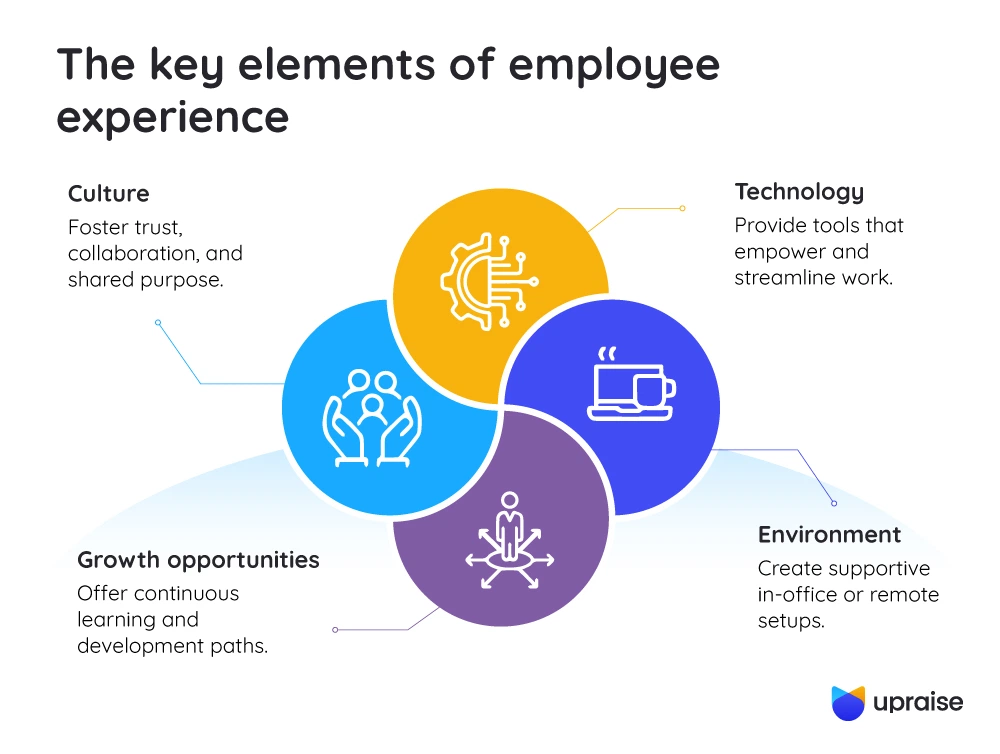
- Culture: The everyday environment of your company, how people communicate, collaborate, and treat each other, is vital. A culture rooted in trust and shared purpose goes a long way in keeping teams motivated across sprints.
- Technology: Tools should empower, not frustrate. Outdated systems slow down progress and drain energy. The right tools, be it for tracking projects or gathering feedback, can make everyday work feel smoother and more meaningful without shouting for attention.
- Physical or remote environment: A thoughtful work setup, be it in-office or remote, shapes how supported people feel, especially when they’re deep in focused work or jumping into a daily stand-up.
- Growth opportunities: Every employee, at the very least, expects growth from their job. Opportunities to learn and grow within their role are a significant factor in maintaining high employee engagement.
These elements, combined, create a workplace where people show up with a genuine intention of contributing.
How to improve workplace culture
In Agile environments, where collaboration and quick feedback are constant, culture is evident in the small moments, such as how ideas are welcomed, how conflict is handled, and how wins are celebrated.
Here are a few ways to build a culture people want to be part of:
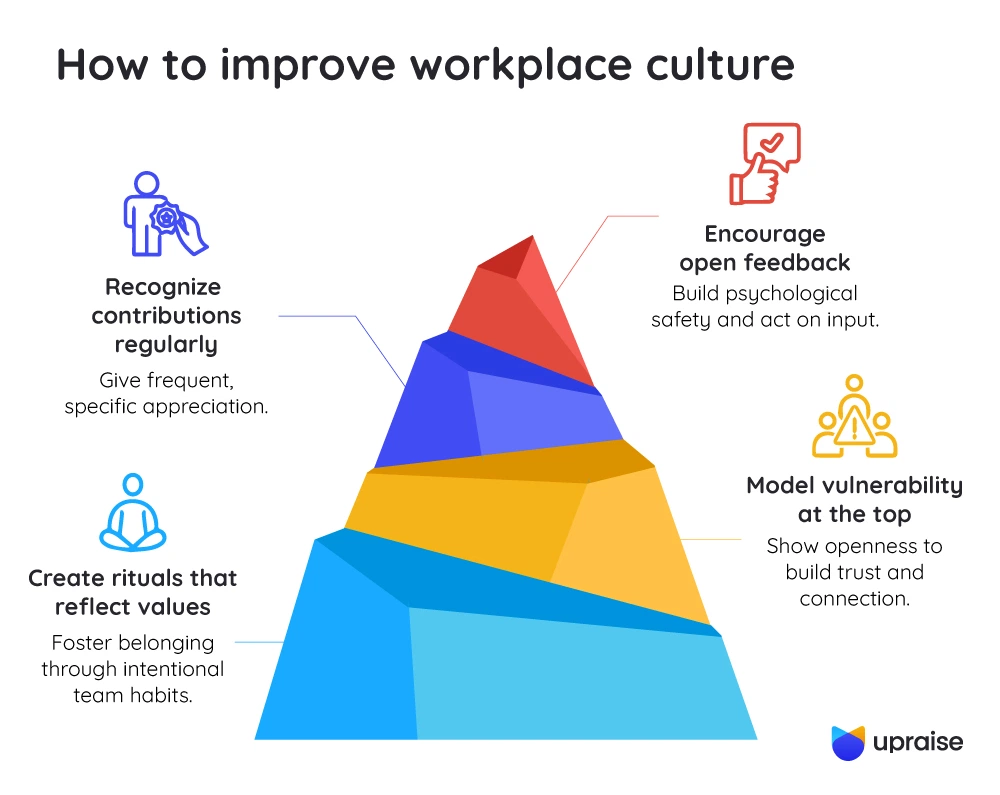
- Encourage open feedback (and act on it): A psychologically safe environment, where team members feel comfortable speaking up, leads to better learning, innovation, and trust. Harvard professor Amy Edmondson’s research found that teams with high psychological safety are more effective and resilient in Agile settings.
Example: Teams at Spotify hold informal 10-minute “feedback huddles” after every sprint to catch micro-frustrations before they grow into major blockers.
- Recognize contributions regularly: Recognition isn’t just a morale booster — it’s a performance driver. According to Gallup, employees who receive regular recognition are 4x more likely to be engaged and less likely to feel burned out.
Example: A product manager at a mid-sized SaaS firm introduced a Friday “Shout-out Slack Thread,” spotlighting team wins and peer appreciation. It quickly became the most viewed channel.
- Model vulnerability at the top: Leaders who admit mistakes, ask for help, or openly share their thoughts build trust and emotional connection within their teams. A study by Google’s Project Aristotle identified psychological safety, often driven by vulnerable leadership, as the #1 predictor of team success.
Example: During a major roadmap shift, a team lead at Atlassian admitted their uncertainty and invited ideas. The openness sparked a more collaborative approach, reducing resistance to change.
- Create rituals that reflect your values: Rituals bring consistency, a sense of belonging, and meaning to teams. They don’t need to be grand, they just need to be intentional.
Example: A remote Agile team runs a “Demo & Donuts” every Friday, showcasing wins over casual conversation. These moments keep the team connected beyond just tasks and deadlines.
Improving employee experience starts with the culture people live in every day. When done right, it becomes one of the strongest factors in workplace satisfaction and an effective answer to improving employee engagement.
The role of leadership in improving employee experience
Leaders shape the employee experience more than any policy ever can. The way they handle feedback, respond to missed deadlines, and show up in high-pressure moments directly affects how safe, motivated, and valued people feel at work.
Here’s how leadership can actively improve the employee experience:
- Lead by listening: Regular one-on-ones aren’t just check-ins—they’re a chance to uncover blockers, morale dips, or ideas that never made it to the sprint board.
- Be transparent, especially during change: If the roadmap shifts or priorities change mid-sprint, explain why. Context builds clarity, and clarity builds trust.
- Hold space for growth: Support team members in exploring new skills, even if it means reassigning a task. That one change might drive stronger employee engagement in the long run.
- Own your role in team culture: If the energy in stand-ups feels off, acknowledge it. Leadership means taking responsibility for both outcomes and atmosphere.
The best teams don’t just follow strong leadership — they grow under it. And in Agile environments where feedback cycles are tight and priorities shift fast, that kind of leadership makes all the difference in workplace satisfaction.
Measuring employee experience success
You can’t improve what you don’t measure. And to improve the employee experience, you need to focus on what people do, say, and feel over time. To get a real sense of what’s working, you need both qualitative and quantitative signals.
Here’s where to start:
- Pulse surveys and feedback loops: Regular, lightweight surveys help capture how employees are feeling throughout their journey, not just during annual reviews. Watch for patterns in engagement dips or recurring blockers.
- eNPS (Employee Net Promoter Score): A quick way to gauge how likely employees are to recommend your company as a workplace. High eNPS often correlates with better retention and team morale.
- Goal visibility and progress tracking: Tracking how individual goals align with team and organizational-level objectives is a powerful way to measure alignment and motivation.
Conclusion
At the heart of every thriving Agile team is a strong employee experience — one shaped by culture, leadership, tools, and the daily feelings of its members. When these elements are intentionally designed, they boost morale, drive performance and real results.
This employee experience guide is here to show that improvement doesn’t require massive overhauls. It’s about getting the fundamentals right, listening more closely, leading more thoughtfully, and using the right tools to measure.
Appropriate tools make that last part easier. Built-in modules in these tools for ongoing feedback, goal tracking, and review cycles help you stay connected to how your people are doing, without breaking your day to day workflow.
So start small. Choose one strategy from this guide and put it into motion. You’ll be surprised at how quickly better conversations, better alignment, and better engagement follow.
FAQs
Q. What factors contribute to a positive employee experience?
A positive employee experience is built on clear communication, supportive leadership, opportunities for growth, and a healthy work environment. When these elements are in place, employees feel a sense of belonging and purpose, which fuels motivation and long-term engagement.
Q. How can employee experience influence employee retention?
When employees feel heard, respected, and supported in their roles, they’re more likely to stay and grow with the company. A good employee experience fosters a strong emotional connection to the workplace, which in turn reduces turnover and boosts loyalty.
Q. What is the role of leadership in shaping employee experience?
Leaders influence the employee experience every day through their communication, feedback, and responses to challenges. Their behavior sets the tone for team culture and directly impacts how safe, trusted, and valued employees feel.
Q. How do you measure employee experience effectively?
To measure employee experience, combine regular feedback loops, goal progress tracking, and engagement scores. Tools like pulse surveys and performance reviews also help reveal patterns in how people feel, work, and grow over time.


