

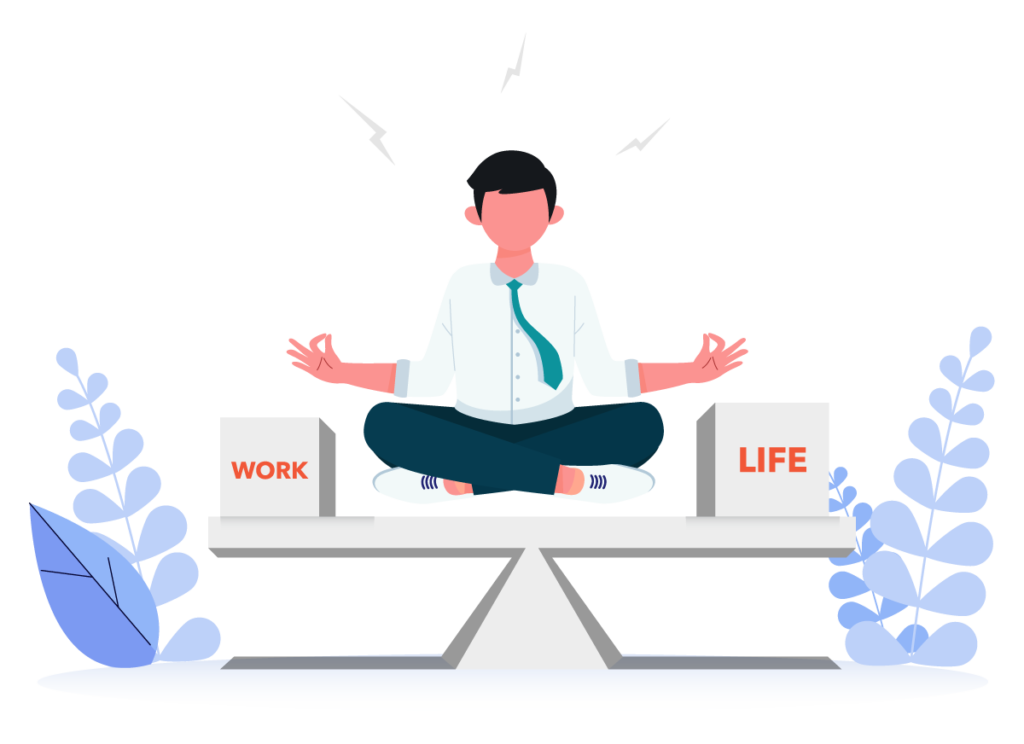
There comes a time in your career when you stop and ask: “Does your work decide how much you live, or do you decide how much you work?” For many, it’s the former. But people are now starting to push back. Not by working less, but by asking for more control. 63% of employees would rather take a pay cut than give up remote flexibility.
This isn’t laziness. It’s about owning your time. This freedom comes with two choices — work-life balance vs. work-life integration. Both aim to make your work manageable, but in different ways. So, which one is a better choice for both employees and businesses? Let’s find out.
What is work-life balance?
Work-life balance means keeping your work and personal time in completely separate boxes. You clock in at nine, work until five, then shut your laptop and walk away. No checking emails after dinner. Everything work-related waits until the next working day.
A healthy work-life balance benefits people who are tired of bringing office stress home with them and want clear, predictable boundaries that everyone can understand.
What is work-life integration?
Work-life integration is quite the opposite. It allows your work and personal life to blend naturally, without forcing them into separate corners. Maybe you step out for a spontaneous lunch with your friends and finish the report later in the evening. Or you have a medical emergency you need to attend to, so you plan your work hours around the doctor’s visit.
But this freedom comes with responsibility. You need to be more self-disciplined because nobody is holding you accountable.
Comparing work-life balance and work-life integration
Both methods address the same problem. They enable people to better manage their work and life. But they go about it in completely different ways. Here’s how:
Time vs energy
A healthy work-life balance starts with time management. You clock in, work, and then log off and pay attention to your personal life in a set routine. Integration is about energy management. You do deep work when you’re most focused and run personal errands when it’s logical, enjoying more control.
Structure vs autonomy
Balance gives you structure through external rules like fixed schedules, break times, and no calls after 6 PM. And it works the same way on most days. Work-life integration lets you choose when and how you work. It gives you autonomy to work when you feel most productive, which can be empowering if you’re disciplined and accountable.
Boundaries vs blending
Balance keeps the line between work and life bold and clear. Once you log off, you are naturally not expected to be communicative. With integration, you might check work messages in the evening, but you also feel free to take a personal call mid-morning.
Understanding this work-life balance comparison with integration helps employees and managers make better, more empathetic decisions.
How to choose between work-life balance and integration
Now, the question arises. Between work-life balance vs work-life integration, which one should you choose? Or is a combination of both better for you? Let’s find out:
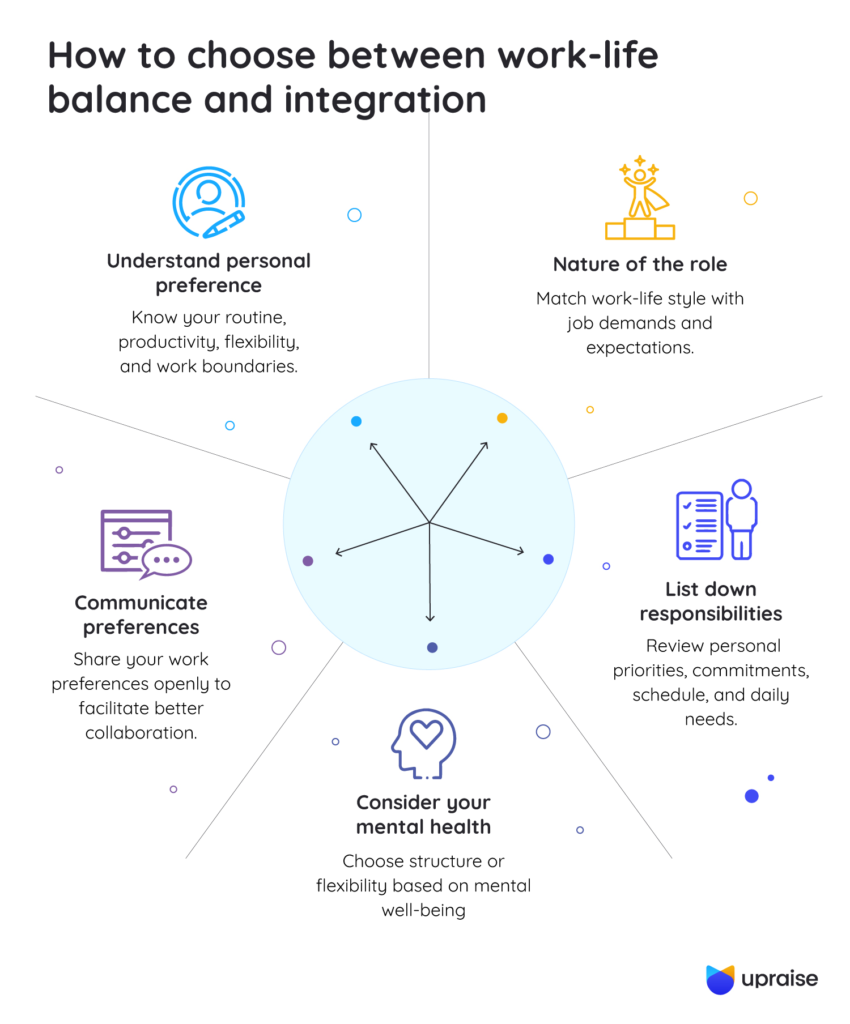
Understand personal preference
Start with yourself. Do you like fixed routines? Or does flexibility help you feel more in control of your day? Think about when you’re most productive, early mornings, late evenings, or spaced throughout the day. Your work style and preference for boundaries all play a role.
Nature of the role
Your responsibilities at work can help you come to a realistic goal. A support executive who needs to be online during customer hours might find balance more practical. However, a designer or writer would find the work-life integration benefits more appealing, allowing them to get things done flexibly. This helps you understand what’s doable within the job.
List down responsibilities
Your personal life inevitably affects your work and vice versa. A parent doing daycare pick-ups might value the freedom to shift hours. Someone training for a marathon might be okay with just the evenings off.
And a manager would appreciate having these boundaries set beforehand. Knowing what your days look like helps guide the choice.
Consider your mental health
Structure brings calm to some people. Others feel boxed in by it. If a fixed routine gives you peace of mind, lean toward balance. If being able to take personal time off whenever you need helps your productivity, integration may be the choice for you. But be mindful that the pressure of accountability is all on you.
Communicate preferences
Once you’ve reflected on what suits you, speak up. Tell your manager what helps you work better and why. Be as transparent as possible to avoid any misunderstandings later. Be willing to listen to the work requirements and try to find a middle ground that works for everyone involved.
What can managers do?
As a leader, the goal isn’t to pick one model and stick to it. It’s to offer flexibility where possible, clarity where needed, and support throughout. Focus on outcomes over hours, and encourage explicit communication about availability.
You can also use tools like the UpRaise People App for Jira that help you support both work styles. It provides features like OKR tracking, transparent leave management, and continuous feedback, helping teams stay on the same page.
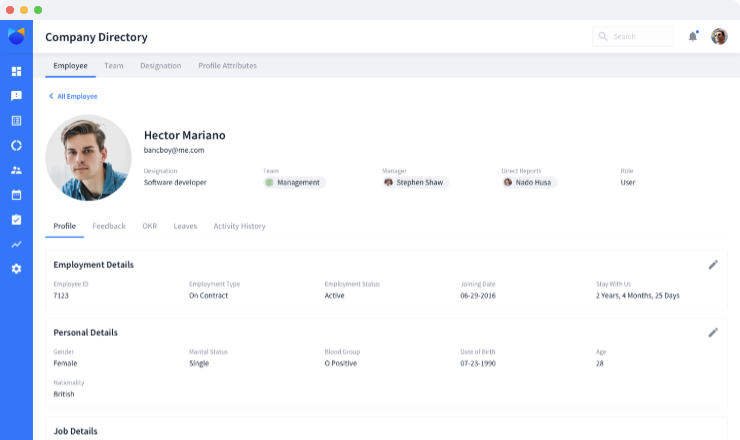
Courtesy- Amoeboids Upraise People App for Jira
In the end, choosing a work setup is a collaborative effort involving both employees and managers. A little bit of emotional intelligence and transparent conversation can lead to better engagement, performance, and trust.
Benefits of work-life balance
Work-life balance offers some solid advantages that explain why so many people still prefer this traditional approach. Here are some of the work-life balance benefits.
- Fixed schedule: You log in and log off at the same time every day, which provides a routine and the comfort of knowing when to switch off.
- Improved sleep: A stable routine can help you keep a consistent sleep schedule, and maintaining regular sleep can impact everything from focus to mood.
- Personal time is yours: It’s non-business hours, so nothing needs to be worked on, and your evenings or weekends are clear.
- Better relationships: Your family members know when you’re available, which makes it easier to plan meals, outings, or just time together.
- Easier collaboration: Teams that work similar hours can schedule meetings and exchange updates without having to wait or send messages in the middle of the night.
Work-life balance is better if you are more comfortable with a set routine every day and prefer working at the same time as your team.
Benefits of work-life integration
Work-life integration is a relatively new way of working that fits how modern life works. Let’s look at what work-life integration benefits you can expect.
- More room for real life: You can run errands at noon, take doctor’s appointments, or even take work while traveling, and make up the time accordingly.
- Less stress over office hours: You don’t need to panic if a personal task cuts into work time, because you can shift things around without guilt.
- Tailored productivity: If you’re not a morning person, you don’t have to force focus at 9 AM. You can work when you’re productive.
- Collaboration with global teams: If your teammates are in different time zones, it’s easier to stretch or split your workday without disrupting your life.
- Manageable emergencies: You can take care of sick kids, home repairs, or family crises without losing vacation days or stressing about delegating work.
Of course, this works best when expectations are clear and there’s mutual trust between you, your team, and your time.
Conclusion
An ideal workspace isn’t about choosing sides between balance and integration. It’s about acknowledging the different ways people function their best. Some need structure, others need freedom, and some work well with a combination of the two. But what they all need in common is clarity, trust, and support.
When teams feel valued and supported, they show up more engaged, more creative, and more committed. Leaders who understand this build an efficiently distributed workforce where everyone brings in their best for the growth of the organization.
FAQs
Q1: What is the difference between work-life balance and work-life integration?
Work-life balance keeps work and personal time separate with clear start and end times. Work-life integration blends both, allowing you to handle tasks according to your personal preference.
Q2: Which one is better: Work-life balance or work-life integration?
The work-life integration and work-life balance comparison depend on the person and their work. Some need structure to stay focused, while others prefer the flexibility to manage their day as it goes.
Q3: How can employees achieve both work-life balance and integration?
It helps to know your preferences, the nature of your job, and your responsibilities. Either way, clear communication about expectations with the team helps you achieve both easily.
Q4: What are the challenges of maintaining work-life integration?
Work-life integration provides autonomy, which can turn into mismanagement. It takes self-discipline, clear priorities, and support from your workplace to make it work well.

