


How many notifications buzzed on your phone today while you were trying to work? How often did a quick TikTok check turn into endless scrolling instead of completing that presentation? And how many times did you end up searching, “how to be productive?”
So many distractions can turn a quick 5-minute break into an hour-long procrastination. Social media, emails, and even trying to do two or more things at one moment can be a start to slowing down your progress and ending up feeling stressed out. Here’s something encouraging: With the right habits, you can tackle any obstacle, manage your day effectively, and improve how you concentrate.
In this article, we’ll examine some easy-to-implement techniques that can help a person form productive work patterns and achieve better results in work and personal life. Let’s get started!
Why are productive habits so important?
Productivity is more than just a tick mark in front of your task list. If you learn how to concentrate & manage your time, it can lead to a more fulfilling and balanced life. Here’s why productive habits are so important:
- Boosts efficiency
Structured habits save time and amplify results. Start your day by listing priorities, tackle the toughest task first, and schedule breaks to stay refreshed. Feeling overwhelmed? Simplify with small adjustments like limiting email checks or focusing on one task at a time. These habits keep you focused and help you get more done daily.
- Reduces stress
A messy workspace often leads to a cluttered mind. To regain control, declutter, organize essentials, and use a daily planner. Clear habits create calm, helping you tackle tasks without the weight of chaos or uncertainty.
- Drives long-term success
Struggling with unfinished projects? Break big goals into smaller steps. For example, write a section of a report daily instead of cramming. Use a habit tracker to celebrate progress—it’ll motivate you to keep moving forward and achieve lasting results.
- Improves work-life balance
Productive habits set boundaries, like logging off at a set time, and help reclaim personal time—batch similar tasks to save hours and create space for hobbies, family, or relaxation.
By building these habits, you’ll boost productivity and become a more balanced, effective version of yourself.
What are some common challenges to stay productive and how to overcome them?
Building productive habits is rarely linear. Too many hurdles would make you throw in the towel. But don’t worry. Using the right strategies will make it easier. Let’s look at some of the most common productivity challenges:
1. Procrastination
We have all been there and done that. Excuses such as “I will work out tomorrow”, or “I will start the project later tonight.” can keep you from reaching your true potential. The secret is to start small. Use the “2-Minute Rule”: if a task will take two minutes or less, do it immediately. This gets you moving and builds momentum for bigger tasks.
2. Lack of motivation
Sometimes, staying motivated may be challenging. Starting an idea is easier, but following through daily can be difficult. To keep going, tie each task to a bigger goal or a reward. Whether finishing that one project to unlock a treat or seeing how it fits into your long-term vision, reminding yourself why it matters can reignite your motivation.
3. Distractioning environment
Distractions from coworkers or your environment can sidetrack your focus. You want to concentrate on the presentation, but someone keeps asking you irrelevant questions. Annoying, right? Establish boundaries- Set clear expectations with your team regarding when you are available and when you need dedicated focus time. Also, establish a workspace that minimizes distractions and boosts concentration.
4. Fatigue or burnout
Burnout happens when you’re running on empty. To avoid it, it’s a good idea to get enough sleep, exercise regularly, and cultivate mindfulness in your daily habits like meditation or deep breathing. Such habits keep the energy going and the wits sharp.
It is normal to face challenges like procrastination, distractions, or feeling overwhelmed when building productive habits. The key lies in identifying these hurdles and adopting strategies to tackle them. Ready to take action? Let’s explore the steps to building productive habits that stick.
How to be more productive – 7 tips to practice
Building productive work habits doesn’t have to feel overwhelming. Small, intentional changes can help you create a routine that works for you. Let’s dive into the steps to understand how can you manage your time:
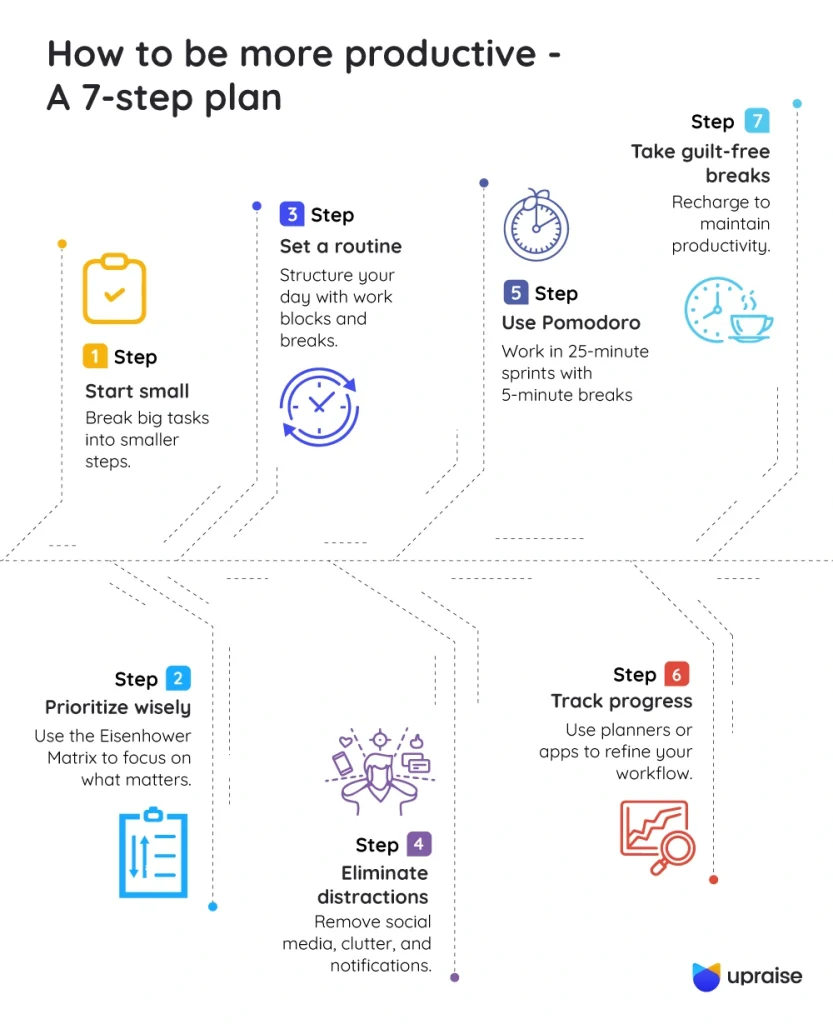
Step 1: Start small and keep it simple
Break big tasks into small bits you can attack right now. Instead of perfection, aim at hitting small goals every day. Every little win builds momentum and keeps you motivated to keep going.
Step 2: Prioritize like a pro
Not every task needs immediate action. Tools like the Eisenhower Matrix (prioritize tasks based on urgency and importance) or the ABC (activity-based costing) method make it easier to decide what’s truly important and urgent. Start your day with the most important tasks when your energy is at its peak, and you’ll feel accomplished before lunch.
Step 3: Set a daily routine that works for you
Give your day a rhythm. Start and end work consistently to give your life structure—schedule time for concentrated work, breaks, and those inevitable meetings. Morning rituals will ease you into your day, while evening rituals will allow you to reflect, recharge, and prepare for tomorrow.
Step 4: Eliminate distractions for good
Identify what takes your mind off work—endless scrolling, clutter or interruptions—and attack the problems head-on. You can experiment with tools like website blockers or noise-canceling headphones to achieve the best concentration possible. A distraction-free workspace can make such a huge difference.
Step 5: Work smarter: Pomodoro Technique
Instead of dragging your heels through work hours, try working in 25-minute chunks with a 5-minute break. This keeps your energy up and prevents burnout. And knowing a break is just around the corner makes it easier to stay focused.
Step 6: Tracking progress and adjusting approach
Keep track of what’s happening using planners, apps, or a checklist. Bonus tip: get a planner that matches your aesthetics or hobbies, as you are more likely to reach for it. Take five minutes each day or any time of the week to reflect on what worked and what didn’t. Adjust as needed-it’s all part of the process.
Step 7: Learn to take breaks without guilt
Don’t underestimate the power of a good break. Step away for 5 minutes every 25–30 minutes to recharge, and schedule longer breaks for meals, exercise, or even some fresh air. Giving yourself downtime helps you stay energized and productive in the long run.
These are all the steps you will need to build a productivity system that will help you get things done and make your workday more balanced and enjoyable.
Strategies to reinforce productive habits at work
Now that you’ve got the basics down, it’s time to strengthen your habits so they stick. Here are some strategies to help you stay on track while making your productivity routine feel like second nature:
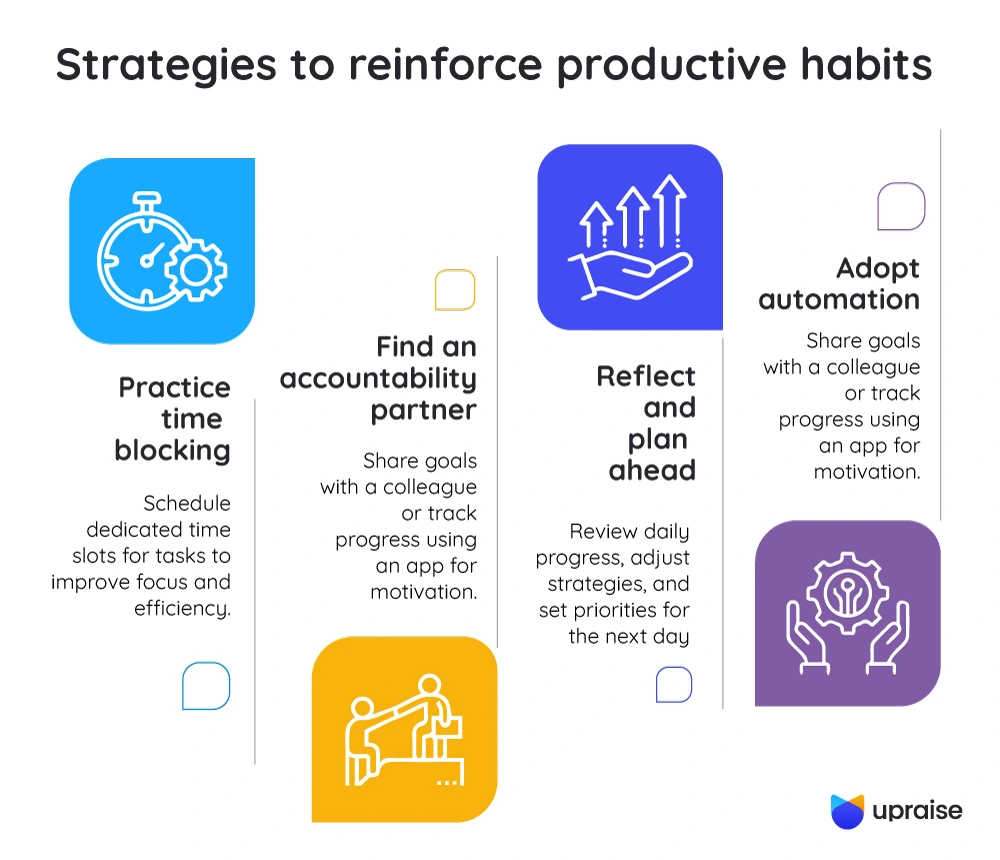
1. Practice time blocking
Time blocking is one of the best ways to stay focused. Schedule specific time slots for particular things and avoid multitasking. Isolating uninterrupted time for a single activity produces more in less time.
For example, dedicate 9:00–10:30 AM to deep work like writing or problem-solving. Then, set aside 2:00–2:30 PM for responding to emails. By compartmentalizing your day, you can give each task your full attention without distractions.
2. Find an accountability partner
Share your goals with a colleague or a friend, or even post them on a habit-tracking app. Knowing someone is counting on you—or having a visual reminder of your progress—makes it easier to stay committed. And don’t forget to reward yourself when you complete tasks or hit milestones! A little celebration goes a long way.
For example, tell a colleague you aim to finish a project by Friday and schedule a check-in with them on Thursday to review your progress. Or, log your daily workouts in a fitness app where friends can cheer you on.
3. Reflect and plan ahead
At the end of each day, take some time to reflect on what you have accomplished. What worked well? What didn’t? Use that insight to prepare for the next day. Make changes to your goals as needed, and you will feel more in control and better prepared for what’s ahead.
For instance, if your mornings are more productive, adjust your schedule to tackle critical tasks earlier in the day. Before logging off, write down tomorrow’s top three priorities to hit the ground running.
4. Adopt automation
Why do something manually when you can automate it? Set up tools or systems to handle repetitive tasks, like email filters or scheduling apps. This frees up your mental energy for more important, high-value activities.
For example, use a calendar app to automatically send reminders for upcoming meetings or create email templates for common responses. Automating these tasks helps you focus on bigger-picture goals.
These are small but sure ways of reinforcing your productive habits and creating a system that works for you in the long run. It’s okay if you don’t see immediate results and change overnight. It’s all about making small, smart adjustments that build momentum over time.
The best tools and techniques for increased productivity
Having the right tools and techniques can make a difference in your productivity. Here are some tools to help you stay on track:
1. Apps
Apps like Trello, Notion, or Asana are great for organizing tasks, tracking progress, and collaborating with your team. Find what works best for you and keep everything in one place.
2. Calendars
Use digital or physical calendars. Schedule specific tasks, meetings, and breaks. It’s as simple as that, but it works!
3. Habit Trackers
This is where apps like Habitica or a good old journal could come in handy when recording your habits and celebrating your wins, too. Seeing these patterns visually motivates you to keep going.
4. Techniques
Try the Ivy Lee Method by writing down the top 6 things you must tackle the next day. Or try the Eat the Frog Technique: Start by doing the one that will hop out of your bed as soon as possible since it’s the hardest thing to do. Both methods help you stay focused and prioritize what truly matters.
With the right tools and strategies in your arsenal, you’ll be ready to face any challenge and boost your productivity to new heights.
How to be more productive in the long run?
This only happens after a period of time. You begin by building those work habits small and deliberately, creating lasting change over time. By tracking your way and adjustments in route, you will increase focus, decrease stress, and improve your life by working toward a goal. It’s all about starting small and staying adaptable.
By making a commitment to building these habits, you’ll transform your workday—and your career—into a true success story. Start building your productive habits today and watch your workday thrive!

