


Imagine you’re a marketing manager preparing to launch a new product. Instead of making decisions alone, you bring together designers, analysts, and sales reps for a brainstorming session. The result? A marketing strategy enriched by diverse insights and expertise. This is the essence of collaborative decision-making—a model that fosters teamwork, drives innovation, and aligns teams toward shared goals.
In this guide, we’ll explore the benefits, tools, and models of collaborative decision-making and how it can transform your workplace dynamics.
But first, let’s understand what exactly is collaborative decision-making, and when you should use it.
What is collaborative decision making?
Collaborative decision-making is the process of engaging a team to share ideas, perspectives, and expertise to reach a consensus or make decisions that drive organizational success. While it may take more time than unilateral approaches, this process minimizes cognitive biases and reduces reliance on trial-and-error tactics.
Collaborative decision-making thrives in work cultures that prioritize high engagement and open communication. This enables creative problem-solving and encourages seamless collaboration.
Collaborative decision-making isn’t just a one-size-fits-all approach; it shines in specific situations where diverse input is crucial. Let’s explore the scenarios where this model delivers the most value.
When should you use collaborative decision making: Key scenarios
At first glance, making decisions through a top-down approach might seem like the fastest and simplest way to move forward. In this model, a leader identifies the problem, makes decisions, and guides the team. However, this method can overlook critical expertise, exacerbate blind spots, and weaken team cohesion. It may result in inefficient or short-sighted solutions.
So, when should you opt for collaborative decision-making instead? Here are five key scenarios where this approach shines:
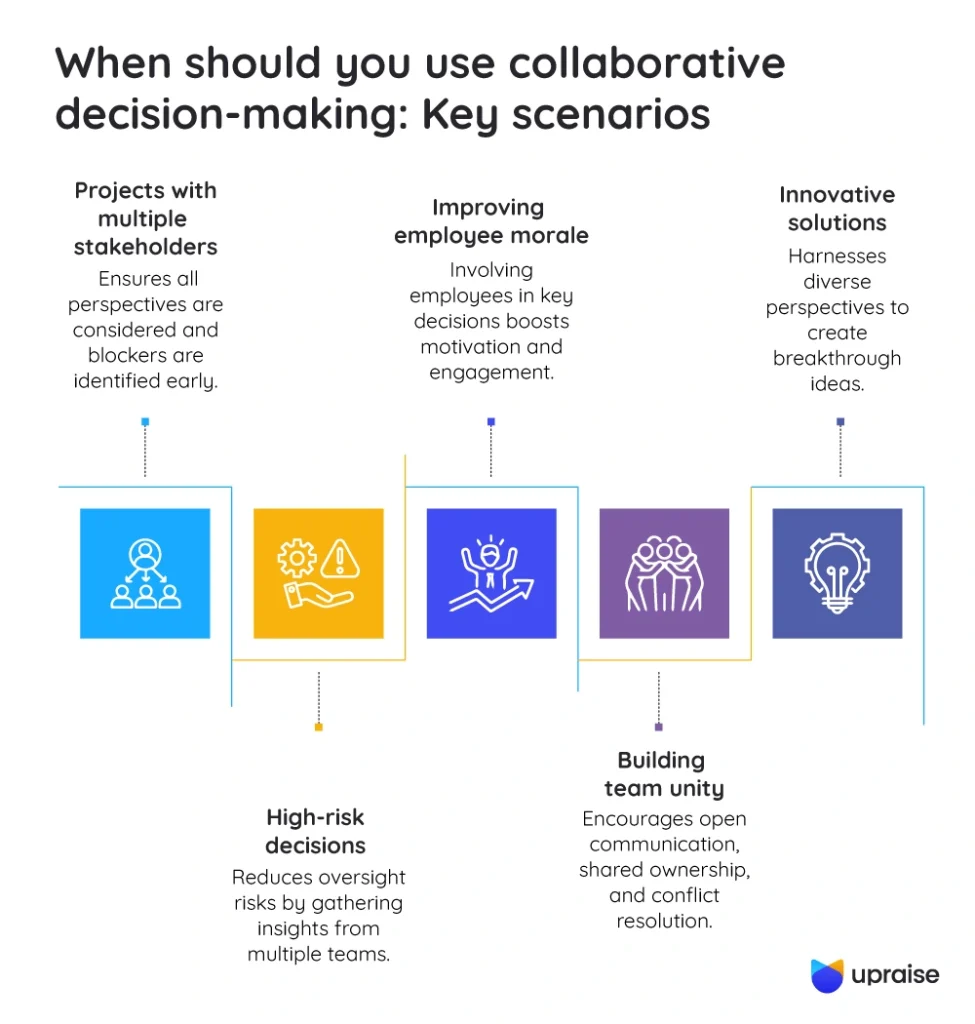
- Projects with multiple stakeholders
When a project impacts multiple departments, teams, or external stakeholders, collaborative decision-making ensures all perspectives are considered. It also ensures the blockers are identified early and the team is aligned on the best path forward.
Example: A food delivery app planning a new service launch collaborates with marketing, sales, and product development to ensure comprehensive GTM strategies.
- High-risk decisions
For decisions with significant stakes—such as major acquisitions, restructuring, or market entry—collaborative input helps reduce the risk of overlooking critical factors.
Example: An edtech startup addressing a budget crisis before a fundraising round seeks insights from finance, operations, sales, customer success, and marketing to identify cost-saving measures and prioritize spending effectively.
- Improving employee morale
Engaging employees in decisions that impact them promotes a sense of value and appreciation, enhancing their morale and motivation.
Example: A multinational company shaping a remote work policy involves representatives from different departments to ensure fairness, practicality, and employee satisfaction.
- Building team unity
Collaboration promotes open communication and shared ownership, creating stronger bonds and resolving conflicts effectively.
Example: A marketing and sales leadership team with conflicting priorities works together to align on product launches, fostering a more harmonious workplace.
- Innovative solutions
Collaborative brainstorming can uncover unique perspectives and lead to groundbreaking solutions.
Example: Designing a new customer referral program becomes a team effort, incorporating ideas from customer service, sales, marketing, and even customers themselves.
Collaborative decision-making is particularly valuable when inclusivity, innovation, and alignment are critical to success. By bringing the right people together, it minimizes blind spots, boosts engagement, and builds solutions that stand the test of time.
Now that we’ve explored when to use collaborative decision-making, let’s dive into techniques and models that can guide toward more effective and structured collaboration.
Techniques for collaborative decision-making
Effective decision-making techniques help project managers foster collaboration, drive consensus, and improve team efficiency. Here are four widely used approaches:
- Nominal Group Technique (NGT): Team members generate ideas independently and then share them with the group. This encourages diverse input and minimizes groupthink.
- Decision Tree method: This visual tool maps out possible outcomes for various scenarios, helping teams evaluate the risks, benefits, and potential impacts of their choices.
- Delphi method: A structured process that gathers expert opinions through questionnaires, synthesizing insights to make informed decisions.
- SCAMPER: A creative problem-solving checklist designed to stimulate new ideas by prompting questions around these actions: Substitute, Combine, Adapt, Modify, Put to Other Uses, Eliminate, and Reverse.
When a team struggles to reach a consensus, conducting a cost-benefit analysis can clarify which solution aligns best with business objectives, balancing feasibility and impact.
Collaborative decision making model
The collaborative decision-making model provides a structured framework that integrates decision-making techniques into a cohesive process. It can be broken down into three key steps:
- Brainstorming: Teams generate a wide range of potential solutions or strategies. Creativity is encouraged, including consideration of unconventional ideas.
- Evaluation: Proposed ideas are analyzed against specific criteria such as feasibility, cost, impact, and risk. This step ensures that decisions are grounded in data and aligned with organizational goals.
- Consensus-building: Team members work together to reach a shared agreement on the chosen course of action, ensuring all viewpoints are included and valued.
This model streamlines collaboration and creates buy-in from all stakeholders, leading to more cohesive decision-making.
Certain guiding principles must exist to make collaborative decision-making truly effective. Let’s explore the core principles that can elevate your team’s decision-making process.
7 principles for successful collaborative decision-making
Collaborative decision-making involves multiple perspectives and inputs, making careful planning essential. Effective management of this process ensures that all voices are heard and decisions align with the organization’s objectives. Here are seven principles to follow:
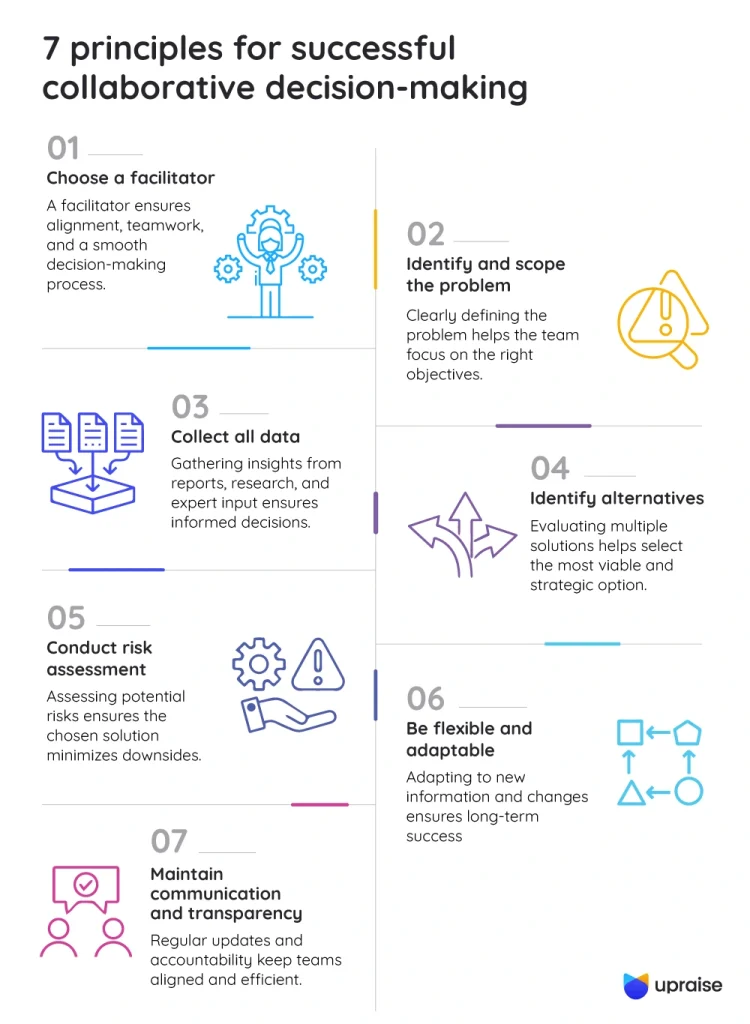
- Choose a facilitator
Every collaborative project needs a facilitator to guide the team, ensure buy-in, and keep the process on track. The facilitator helps define success, align objectives, and foster teamwork throughout the process.
Example: A marketing team developing a new social media campaign for a product launch benefits from a facilitator who manages strategy, creative input, and budget considerations.
- Identify and scope the problem
The first step is for each team member to articulate the problem clearly and define the goals. Understanding the problem ensures the team can focus on the right objectives.
Example: A small e-commerce business facing declining traffic and sales must identify the root cause—whether it’s performance issues, marketing flaws, or customer experience problems.
- Collect all data
Gathering relevant data from all teams involved ensures informed decisions. This might include internal reports, external research, and expert consultations.
Example: Surveys, user interviews, and competitive analysis inform decisions for a new advertising campaign.
- Identify alternatives
Evaluate potential solutions against company values, financial implications, and corporate objectives. This step narrows down options for final selection.
Example: A local bakery could consider creative solutions like hosting a music concert or expanding their menu to boost sales.
- Conduct risk assessment
List unknown factors and assess the risks associated with each alternative. A thorough risk-benefit analysis ensures that the chosen solution minimizes downsides.
Example: A startup developing an AI-powered personal assistant must plan for data privacy and security risks.
- Be flexible and adaptable
The decision-making process should be adaptable as new information surfaces or circumstances change. This flexibility is key to long-term success.
Example: A fintech startup must be ready to pivot as market trends, user behavior, and regulatory challenges evolve.
- Maintain communication and transparency
Effective communication ensures that all team members are accountable for outcomes. Regular check-ins and updates maintain alignment and transparency throughout the process.
Example: A product development team tracks progress using weekly check-ins and a shared project management tool, ensuring everyone is aligned on goals and deadlines. This transparency fosters accountability and allows for quick adjustments when challenges arise.
These principles lay the foundation for a successful collaborative decision-making process, helping teams confidently reach optimal solutions. In the next section, we’ll dive into the impactful tools and collaborative decision making softwares that can streamline the process in the workplace.
Impactful collaborative decision-making tools for the workplace
Effective tools can make collaborative decision-making easier and more streamlined, helping teams work together efficiently. Below are some key tools designed to enhance various aspects of the decision-making process:
- Project management software
- Jira: Ideal for agile teams, Jira allows task assignments, progress tracking, and real-time communication within sprints and project planning.
- Asana: A user-friendly platform for managing projects, tasks, workflows, and resource allocation, ensuring smooth team collaboration.
- Communication and collaboration platforms
- Slack: Facilitates team communication and decision-making through channels, threads, and file sharing.
- Microsoft Teams: Combines chat, video conferencing, and file sharing to support real-time collaboration and decision-making.
- Google Workspace: Tools like Google Docs, Sheets, and Slides allow for collaborative editing and instant feedback.
- Specialized decision making software
- Decisions: A cloud-based platform designed for brainstorming, idea evaluation, voting, and consensus-building.
- MindManager: A mind-mapping tool that visually represents decision-making processes and outcomes.
- Feedback tools
- SurveyMonkey & Typeform: These platforms help gather feedback through surveys, offering insights from team members and stakeholders.
- UpRaise for Employee Success: UpRaise streamlines continuous feedback and performance reviews, helping boost employee morale and engagement, which is essential for effective collaboration. Integrated with Jira, it enhances performance management and encourages alignment on team goals.
- Decision support systems
- XLSTAT, Tableau, PowerBI: These tools offer robust data analysis and visualization capabilities, allowing teams to present and interpret decision outcomes clearly.
By leveraging these tools, teams can enhance their decision-making processes, ensuring more effective and aligned outcomes.
Drive organizational success with collaborative decision-making
Collaborative decision-making leverages diverse expertise for comprehensive project planning, efficient implementation and drives innovation. Organizations benefit from using well-tested decision frameworks and a sustainable collaborative decision-making model.
By moving beyond top-down decision-making, you can cultivate a culture of working together and have teams aligned to the larger organizational goals. This improves employee morale and team cohesion and also leads to better-quality solutions. Collaborative decision-making practices allow organizations to navigate complex challenges, improve employee engagement, and achieve strategic goals.
FAQs
Q1. What is collaborative decision-making?
The definition of collaborative decision-making is a process where a group of individuals works together, sharing ideas, perspectives, and expertise to reach a consensus or make decisions that benefit the organization. It involves shared responsibility, open communication and diverse perspectives to reach a collective outcome.
Q2. What are the benefits of collaborative decision-making?
The benefits of collaborative decision-making include:
- Diverse perspectives included from multiple stakeholders
- Better quality and innovative decisions and outcomes
- Shared accountability and commitment
- Reducing inter-team friction and improved team unity
Q3. What tools are best for collaborative decision-making?
Look for platforms that facilitate communication, brainstorming, idea evaluation, feedback and consensus-building.
- Organize tasks and track progress: JIRA, Asana
- Brainstorming, document sharing and real-time collaboration: MS Teams, Google Workspace
- Communication platforms: Slack, Microsoft Teams
- Specialized decision-making platforms: Decisions, MindManager
- Feedback tools: SurveyMonkey, Typeform
Q4. When should a person choose collaborative decision-making over individual decision-making?
Collaborative decision-making is effective for complex issues that require diverse expertise and impact multiple stakeholders. Scenarios that benefit from this approach include strategic planning, high-risk decisions, conflict resolution between teams, boosting team morale and developing innovative solutions.
Q5. What is the collaborative decision-making model?
The collaborative decision-making model is a structured approach where a group works together to make a decision. Key stages include:
- Identify the problem: Generate potential solutions through brainstorming
- Bring in all perspectives: Evaluate the pros and cons of using criteria like impact, cost and risk.
- Discuss and build consensus: Work toward an inclusive agreement on the next steps
- Implement the solution: Deploy the strategy or solution with unified teamwork and close project tracking
- Get feedback: Use surveys and meetings to get feedback and inputs that can make the project more effective

