


Sarah, a marketing manager, starts her day with a packed to-do list. Emails were piling up, meetings taking longer than expected and deep-focus tasks kept getting interrupted. Before learning to use time management techniques, she would feel drained at the end of the workday and hadn’t made much progress with her workload. Is there a better way to stay focused and productive?
The Pomodoro method is the answer.
82% of employees do not have any time management system in place to organize themselves. This drops their productivity levels and makes them lose their focus. However, methods like the Pomodoro technique have become game changers in time management.
It helps you break work into focused intervals, usually 25-minute sprints followed by short breaks. This keeps the brain fresh and makes it simpler to manage overwhelming tasks.
Want to begin utilizing your time effectively? This article explores what is the Pomodoro method, how it works and its benefits.
What is the Pomodoro technique?
The Pomodoro method is a time management technique that breaks down work times into short and regular intervals to make the flow more structured and increase focus. Francesco Cirillo developed it in the late 1980s.
The next question is, how long is one Pomodoro cycle? This method breaks down tasks into 25-minute intervals, followed by short 5-minute breaks. It helps improve focus and reduce mental fatigue. Whether you are working in a company managing projects, overseeing regular tasks or simply studying, it is an effective way to maintain productivity.
How does the Pomodoro method work?
Employees can’t work with a complete focus for eight hours straight without their productivity levels dropping. The Pomodoro technique creates smaller intervals to tackle this problem and restrict distractions from kicking in.
This method is said to work for 25 minutes with complete focus (this session is called a Pomodoro) and then take a five-minute break. Complete four such cycles and then take a longer break of 15-20 minutes. This way, the chances of experiencing burnout are reduced, and the focus is increased.
The Pomodoro technique is simple yet very effective. It trains the brain to work with time instead of against it. Think about it; instead of waiting for your long day to end, you would only be waiting for the 25-minute interval to end. This way, you will stay motivated throughout the day and accomplish all your tasks.
Steps to set a 25-minute Pomodoro timer
The Pomodoro timer emphasizes creating small periods of high focus to enhance overall productivity. Here is how you can set up a structured format using the Pomodoro technique:
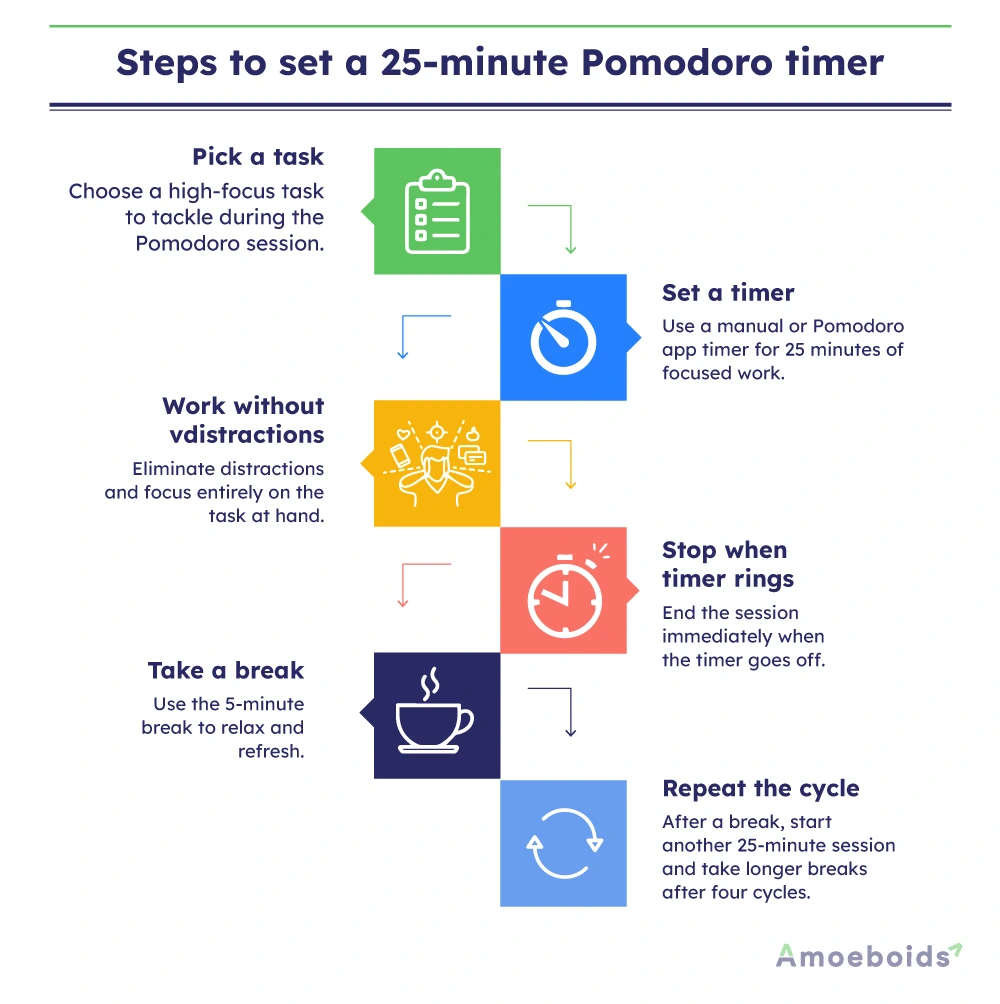
- Pick a high-focus task: Choose a task that requires maximum focus from your list of tasks. This could be anything difficult for you, whether it’s an important client presentation or preparing a weekly report for your manager. The key is to ensure you have a clear focus set for what to work on during this session.
Tip: If your task requires more than 25 minutes, break it into smaller tasks to spread across two or more Pomodoro. Likewise, if your task is small and takes less than 25 minutes, combine it with other small tasks to complete a 25-minute cycle.
- Set a 25-minute timer: Set up a timer manually on your smartphone or simply by using a Pomodoro application. The apps specifically designed for a Pomodoro schedule will help you stay on track.
However, you must remember to focus entirely on the task once the timer begins. You should commit fully to the task at hand for 25 minutes.
- Work without distractions: During this 25-minute session, eliminate all distractions:
- Silence notifications on your phone or computer.
- Avoid checking emails or social media.
- Let colleagues or family know you’re in a focused session.
- Keep a notepad nearby to jot down distracting thoughts and return to them later.
This will ensure your focus is exactly where it needs to be so you are incredibly productive.
- Stop when the timer rings: As soon as the 25-minute timer rings, stop what you are doing. Yes, even if you are in the middle of a task, drop it. This is done to ensure that time discipline stays intact and that you do not overwork, which leads to mental fatigue.
- Take a five-minute break: Now begins your five-minute break, where you can relax however you want. The aim is to step away from your desk to get out of the work zone mentally. You could:
- Stretch or take a short walk.
- Grab a coffee or drink water.
- Do a quick breathing exercise.
These breaks help your brain refresh and reset so you’re ready for the next Pomodoro session.
- Repeat the cycle: After your 5-minute break, set the timer for 25 minutes again and continue working. After four Pomodoro sessions, take a longer break of 15–30 minutes to recharge before restarting the cycle.
Following these steps creates a structured work routine that maximizes focus and minimizes burnout. It also has more benefits, which we will explore next.
Benefits of the Pomodoro technique
The Pomodoro technique helps individuals manage their productivity and stress levels. It helps you establish a routine to develop consistent work habits and maintain a regular standard of productivity. Here are some of its key benefits:

- Increases focus and concentration: When your brain knows there is a time frame for which you have to work, you can stay fully focused. Not just this, but the ticking clock also creates a sense of urgency and helps get tasks done faster.
- Reduces procrastination: Beginning a task is the hardest step that leads to procrastination. With the Pomodoro technique, overwhelming tasks are broken down into smaller, more manageable tasks. As a result, the momentum naturally builds and procrastination is reduced.
- Prevents mental fatigue: Long hours of continuous work can drain your energy. Regular 5-minute breaks allow your mind to recharge and stay productive throughout the day.
- Improves time awareness: The technique helps you track how long tasks take so you can plan your day effectively. Over time, you become better at estimating work durations and setting realistic deadlines.
- Enhances work-life balance: By setting a timer of 25 minutes and breaks thereafter, the Pomodoro technique minimizes overworking. Providing healthy breaks also discourages overworking to achieve a healthy work-life balance.
- Encourages improvement: The Pomodoro technique tracks the time taken for different tasks. As a result, it becomes easier to identify patterns, identify bottlenecks and refine the workflow for continuous improvement.
By integrating this simple yet effective method into your routine, you’ll develop a sustainable approach to productivity.
Conclusion
The Pomodoro Technique isn’t just a time management method – it’s a powerful tool for boosting focus, beating procrastination and maintaining productivity without suffering burnout. By working in 25-minute intervals with short breaks, you create a structured, distraction-free workflow that keeps your mind fresh and engaged.
Whether you’re tackling a big project or managing daily tasks, this simple yet effective technique can help you work smarter, stay motivated, and achieve more in less time. Try it yourself and see how a ticking timer can transform your productivity.
To take it a step further, various digital tools can help you seamlessly integrate the Pomodoro Technique into your daily work. With goal tracking, task alignment, and performance visibility all in one place, UpRaise ensures your focused efforts lead directly to meaningful results.
FAQs
Why is it called the Pomodoro Technique?
The Pomodoro Technique comes from the Italian word “Pomodoro,” meaning tomato. Francesco Cirillo, who developed this method in the late 1980s, used a tomato-shaped kitchen timer to track his study sessions.
Does the Pomodoro Technique work?
Yes, the Pomodoro technique helps manage time more effectively and enhances productivity. It also helps create a better work-life balance by eliminating overworking and mismanagement.
Is the Pomodoro Technique effective?
Yes, the Pomodoro technique is effective in helping minimize procrastination and increase employee productivity. It increases focus by breaking down complex tasks into manageable 25-minute sprints to complete work without feeling overwhelmed.
Is the Pomodoro Technique scientifically proven?
Although the Pomodoro Technique hasn’t been the focus of extensive scientific research, cognitive psychology and productivity studies strongly support its core principles, such as timeboxing, focused work sessions, and regular breaks.

