


As a team lead, Steve has recognized great potential in a quiet team member. While the promise is clear, a few roadblocks remain to address. With an important project ahead, Steve knows it’s time for a discussion before assigning this rising star to the task.
A one-on-one meeting is the perfect solution for such conversations. When executed effectively, these meetings provide team members with clarity and confidence.
This guide will explore the importance of one-on-one meetings, how to conduct them successfully, and common pitfalls to avoid. We’ll also show how tools like UpRaise can enhance these discussions and amplify their outcomes.
Why an effective one-on-one meeting matters
One-on-one meetings are personalized, uninterrupted interactions where managers and employees can connect meaningfully. They’re less about progress updates and more about growth.
Understanding their significance can produce pivotal changes in any team.
Purpose of a one-on-one meeting
A one-on-one meeting can boost morale and drive organizational growth. Let’s look at their main purpose:
- Create a space to talk openly and honestly
- Address challenges head-on and find practical solutions
- Offer tailored guidance to help employees grow and excel
- Strengthen connections through meaningful conversations
- Align personal goals with company objectives to keep everyone accountable and focused
Impact on employee engagement
An effective one-on-one with the boss becomes a safe space where employees can voice concerns, align goals, and celebrate progress. Here’s how it boosts employee engagement:
- Employees feel supported when their concerns are genuinely heard
- Addressing pain points and aligning on goals deepens your connection with your team members
- Energizes employees by showing their work is valued and their growth is prioritized
As a result, your team becomes more motivated, committed, and engaged to deliver quality results.
Role in organizational success
Regular feedback and goal-setting during a one-on-one meeting blend individual efforts with organizational objectives. Let’s break down how this helps:
- Aligns individual goals with organizational objectives by showcasing how the employee’s contributions drive the company’s vision
- Encourages ownership and empowers employees with responsibility through regular feedback and goal-setting
- Boosts team productivity when strategies and actionable insights are discussed
Preparing for a one-on-one meeting with Boss
Have you ever walked into a meeting, fumbling for direction and hoping it works out? That’s the last thing you want in a one-on-one. Preparation isn’t just helpful – it’s the foundation for unlocking all the benefits we’ve discussed.
Let’s examine some simple practices for setting the tone for your meeting and some key tips every manager should know.
Create a meeting agenda
A well-planned agenda is the backbone of a successful one-on-one meeting. By setting a structure and plan for the discussion, everyone can prepare for what’s to come.
Here’s how to structure it effectively:
- Start with a quick recap: Cover earlier conversations to ensure continuity and address unresolved points.
- List essential discussion points: Include project updates, challenges, career aspirations, and areas for personal growth.
- Encourage employees to contribute: Prompt them to add their own topics or concerns, making the agenda more relevant and engaging.
- Prioritize critical issues: Organize topics by importance to tackle the most pressing matters first.
- Allow flexibility: Leave room for unexpected topics that might come up during the meeting.
When reviewing how to prepare for a performance review, a thoughtful agenda keeps the one-on-one meeting focused and ensures no valuable time is wasted.
Also read: How to Best Prepare for a Performance Review Meeting
Tips to nail preparation
A one-on-one meeting shouldn’t feel like a chore. They’re your chance to connect, solve problems, and inspire your team. Here are key tips to nail prep and make every session count:
- Do your homework: Dive into recent wins, struggles, and feedback. A personalized touch shows you’re paying attention.
- Listen like a pro: Show empathy and attentiveness. Entering the discussion with the mindset of listening rather than speaking is a surefire way to build trust.
- Create a ‘no-judgment’ zone: Before the one-on-one meeting begins, warmly highlight that this is a safe space to share openly and honestly. Let the team members be open
- End with a plan: Prepare a list of possible next steps and actionable outcomes that benefit both sides. This helps get to discussing the plan rather than be stuck with brainstorming solutions
Conducting the one-on-one meeting
With your agenda ready and the right mindset in place, it’s time to put preparation into action. Whether it’s project updates or performance reviews, every one-on-one meeting involves this three-step structure:
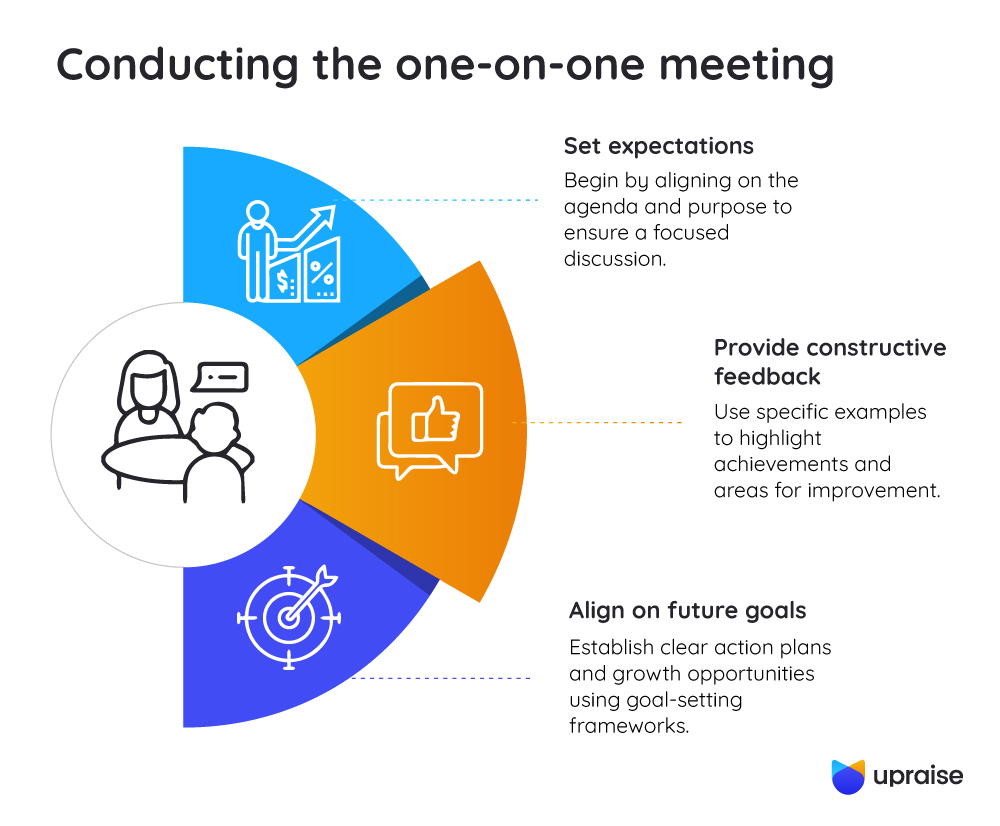
Step 1: Set expectations
Kick off the one-on-one meeting by setting the tone and framing its purpose. Revisit the agenda to confirm what you’ll cover, from open points and project updates to feedback and plans.
A quick rundown helps you and your employees feel aligned, eliminating guesswork and ensuring the discussion stays focused and productive. Think of it as setting the GPS before hitting the road.
Step 2: Provide constructive feedback
Next, dive into the agenda points. Address them using specific examples to highlight achievements and address concerns or areas for improvement. Remember to balance positive feedback with actionable suggestions. This is also the perfect time to review employee’s challenges and frustrations.
Clear, constructive feedback also boosts confidence, skill development, and growth. When feedback is actionable, it reduces unnecessary back-and-forth and simplifies how to implement action plans.
Step 3: Align on future goals
Wrap up the feedback exchange by crafting a clear and motivating action plan. Adopt goal-setting frameworks like SMART goals (Specific, Measurable, Achievable, Relevant, Time-bound) to give employees a clear direction for the next review period.
Also, use this moment to explore growth opportunities. What new skills can they learn? What career milestones are on the horizon?
Document all these conclusions to clear accountability and traceability.
Tips for a fruitful discussion
These reviews are an employee’s moment to shine and set the stage for them to shape their future. That’s why it’s important to facilitate it. Here are five tips that help you bring out the most in them:
- Reflect on accomplishments: Prompt your team to showcase wins and their work’s impact confidently.
- Be honest about challenges: Ask them about obstacles, hardships, and challenges. Encourage them to seek guidance to tackle them head-on.
- Prepare thoughtful questions: Refer to the agenda and frame performance review questions about their career growth. Let them pick specific topics they’d like feedback on or ways to level up.
- Set time aside for ideas: Create a dedicated slot for sharing suggestions on improvements or fresh initiatives. This will help them demonstrate their proactive and invested attitude.
- Help them stay open-minded: Highlight that feedback should be embraced as an opportunity to learn and collaborate on actionable next steps.
Done right, one-on-ones aren’t just meetings; they’re game-changers for your team’s growth and morale.
Common pitfalls to avoid while conducting one-on-one meetings
Knowing how to conduct a one-on-one meeting also means spotting potential missteps. Let’s tackle common pitfalls, whether a project-specific one-on-one or that once-a-year (or quarter) performance review.
For one-on-one meetings
- Don’t treat it like a status update: Reducing the meeting to a routine check-in diminishes its impact. Instead, focus on meaningful discussions around growth, challenges, and goals.
- Never miss or cancel: Frequently canceling a one-on-one meeting sends a message that it and the employee aren’t a priority. Commit to a consistent schedule to show employees their time and input are valued.
- Stop ignoring employee input: Ignoring employee concerns creates a disconnect and devalues their input. Encourage them to voice opinions and include agenda items to make the meeting more collaborative.
- Skipping follow-ups: Neglecting a discussion on action plans erodes trust and accountability. Always recap decisions and follow through on agreed steps.
For one-on-one performance reviews
- Don’t stick with past performance: Solely focusing on the past makes the review feel static and even prejudiced. Balance feedback with forward-looking goals to inspire growth and motivation. Plus, focus on current behaviors and outcomes, not personal traits.
- Avoid being overly critical: Harsh criticism discourages employees and creates a negative exchange culture. Avoid negative phrases and make feedback constructive by pairing it with actionable recommendations to foster improvement.
- Forget generalized feedback: Vague comments confuse employees and limit growth. Use specific examples to ensure clarity and relevance.
- Never rush the process: A hurried review signals a lack of care and attention, and it doesn’t lead to progress. Dedicate enough time to ensure employees feel heard and valued.
Checklist for every manager’s one-on-one meeting
All these tips and steps may be intensive. It’s important to have a checklist with all the key pointers ready. Here’s a breakdown of what you need to do at every stage.
Pre-meeting preparation
- Prepare a list of discussion points.
- Review past meeting notes and follow up on unresolved items.
- Set a clear agenda and share it with the employee in advance.
During the meeting

1. Start with positivity
- Recognize achievements and efforts since the last meeting.
- Celebrate wins to build morale and set a positive tone.
2. Discuss challenges and progress
- Review the employee’s progress on goals.
- Identify obstacles and brainstorm solutions collaboratively.
- Address career development and long-term aspirations.
3. Clarify issues
- Encourage the employee to voice concerns or questions.
- Use open-ended questions to dive deeper:
- Do you feel supported in your role?
- Are there areas where you’d like more guidance or resources?
- What can I do to help you succeed?
4. Wrap up with action items
- Summarize key takeaways from the meeting
- Agree on clear next steps with deadlines for both sides
Post-meeting follow-up
- Document key points and action plans along with expected due dates
- Follow through on tasks from your end as a manager to build trust
- Schedule the next one-on-one meeting, preferably during the same meeting
Tools that support one-on-ones and performance reviews
The right tools add structure and focus to your one-on-one meeting or performance review. They also reduce manual effort and prep time.
UpRaise, a performance management app built for Atlassian Jira, is a great example. It stands out with features that turn discussions into actionable outcomes. Here are a few of its features, ones that every meeting manager and business should have:
- OKR planning and tracking: Streamline the process of setting, assigning, and tracking objectives and key results for teams and individuals.
- Continuous performance feedback: Facilitate a feedback-rich culture to ensure real-time insights and development opportunities.
- Progress visualization dashboards: Gain clear insights into progress through interactive dashboards, ensuring transparency and alignment.
- Performance review management: Conduct structured performance evaluations seamlessly with customizable review templates.
- Integration with business workflows: Boost efficiency by syncing OKR updates and performance insights directly with your existing tools and processes.
Whether you’re looking to prepare for performance reviews or craft meaningful one-on-one questions, tools like these help make your meetings results-driven and impactful.
Case study: How a Nordic gaming company boosts employee engagement with UpRaise
A Nordic gaming company faced challenges fostering employee recognition and driving productive performance discussions. Here’s what happened when they adopted UpRaise:
- Frequent Feedback: UpRaise enabled a shift to at least six feedback sessions per quarter, offering regular performance insights during each one-on-one meeting
- Contextual Feedback: Linking feedback to specific Jira tasks or OKRs ensured focused and productive discussions in each one-on-one meeting
- Recognition Culture: UpRaise embedded recognition into daily operations, boosting morale by integrating it into one-on-ones and performance reviews
The result? Adopting UpRaise achieved a 6x boost in employee recognition. They also transformed every one-on-one meeting from routine check-ins to meaningful growth conversations.
Strengthen teams with an effective one-on-one meeting
A great one-on-one meeting or performance review is the secret sauce to creating high-performing teams. With this guide’s tips for smart preparation and execution, managers can enhance employee efficiency, build trust, and support long-term career growth
With tools like UpRaise for Employee Success, you streamline prep, track feedback, and align goals effortlessly. UpRaise features customizable agendas and feedback analytics to make every meeting impactful.
Ready to elevate your one-on-ones? Get started with UpRaise today!

