


Someone’s chasing a deadline. Someone else feels blindsided by feedback. Tension creeps in, and suddenly, collaboration takes a hit.
But let’s be honest. Conflict isn’t the villain. Avoiding it is. The real skill lies in how your team responds when things get messy. That is where the organization’s role becomes critical, not just in training your employees in managing team conflict but in equipping them with processes, tools, and clarity.
This article outlines how enterprises can empower new leaders to recognize, resolve, and reduce team conflict. It also explains how a structured performance ecosystem builds a more resilient and productive team culture.
What is team conflict?
Team conflict shows up when people’s goals, values, or working styles don’t line up.
Think of it like a tug-of-war. A bit of pull can motivate the group. But if it drags on without balance, things fall apart.
Not every disagreement is bad. Sometimes tension leads to better ideas and sharper thinking. The problem starts when issues get ignored. That’s when frustration builds, trust cracks, and productivity takes a hit.
Here’s a quick look at the common types of conflict:
| Conflict type | Description | Example |
|---|---|---|
| Task-based conflict | Disagreements over deadlines, resources, or goals | Two product managers push for their feature to be included in the next sprint. One argues it’s a quick win for customers, while the other insists it’s tied to a critical KPI. |
| Interpersonal conflict | Personality clashes or miscommunications | A new developer feels dismissed because a senior teammate frequently interrupts them in standups. The senior believes they’re just being “direct,” but it comes across as undermining. |
| Process conflict | Disputes over how work gets done | During sprint planning, engineers want more flexible estimation, but QA insists on stricter story-pointing to plan their workload accurately. |
Helping managers identify these conflict types early is half the battle. Tools like the UpRaise People App for Jira offer real-time feedback and performance tracking, giving leaders visibility into team dynamics before issues escalate.
Why does conflict happen in teams?
When people with different strengths, habits, and stress levels work side by side, conflict is bound to show up. It’s not a sign that something’s broken. It’s just part of how teams operate.
Here’s what tends to spark tension:
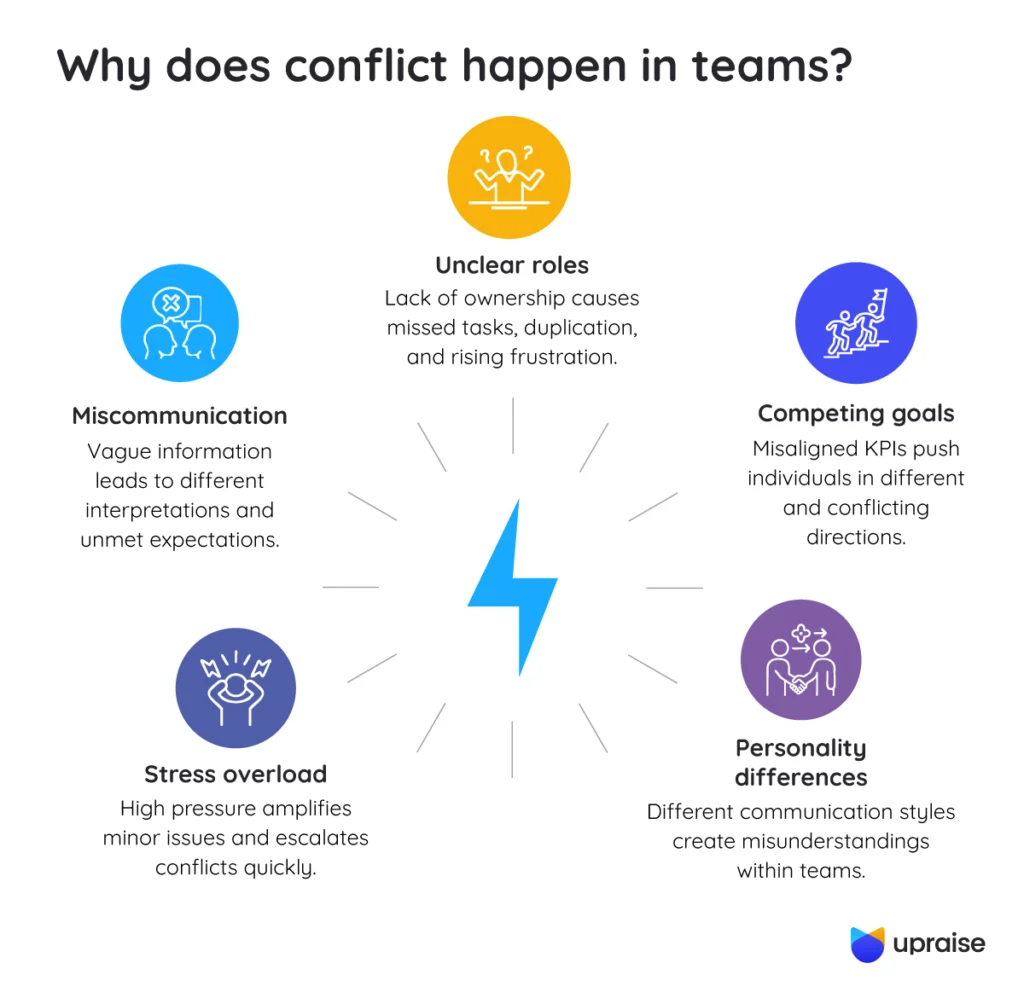
- Miscommunication: A vague brief lands, and everyone interprets it differently. One person thinks it’s a low priority. Someone else wants it done yesterday.
- Unclear roles: When no one’s sure who owns what, work gets missed or duplicated. Frustration builds fast.
- Competing goals: If individual KPIs matter more than team results, people start pulling in different directions.
- Personality differences: Some teammates talk things out as they go. Others think before they speak. That mismatch can lead to a misunderstanding.
- Stress overload: When the team is stretched too thin, even small things feel bigger than they are.
What this really means is that managers need to understand what’s driving the conflict before they try to fix it. That awareness makes resolution significantly easier and faster.
Conflict resolution strategies for first-time managers
When a first-time manager faces real conflict, hesitation is natural. Without prior experience, they may not know how to approach it. This is where the organization plays a critical role.
By offering structured guidance and accessible tools, companies can help new leaders respond with clarity and confidence. Here are key strategies and first-time manager tips that enterprises should encourage and support for managing team conflict:
| Strategy for handling team conflict | Action | Why it works |
|---|---|---|
| Address issues promptly | Encourage managers to schedule a conversation within 24 hours of a conflict | Prevents escalation and shows that concerns are taken seriously |
| Listen actively | Train managers to let each person speak without interruption and reflect on what they hear | Builds trust and makes everyone feel heard |
| Stay impartial | Reinforce neutrality, even if one party is more relatable | Maintains fairness and encourages open conversation |
| Focus on solutions | Help managers steer the dialogue toward shared goals instead of blame | Keeps the conversation productive and forward-focused |
| Use data for clarity | Leverage tools like UpRaise for Employee Success to bring in metrics such as task completion rates | Provides an objective foundation for resolution |
| Collaborate on resolutions | Support co-created action plans instead of top-down decisions | Ensures buy-in and builds accountability |
Imagine two team members disagreeing on how to conduct code reviews. Instead of letting it spiral, a well-trained manager can step in, guide them toward a mutually agreed-upon checklist, and move forward with clarity.
This kind of resolution for managing team conflict becomes easier when organizations invest in frameworks and feedback systems that support a culture of dialogue and ownership.
How to prevent conflict in the future
Handling team conflict doesn’t have to be reactive. The most effective organizations build habits and systems that reduce the likelihood of friction before it starts.
Here are five prevention strategies companies can support to help first-time managers create healthier team dynamics:
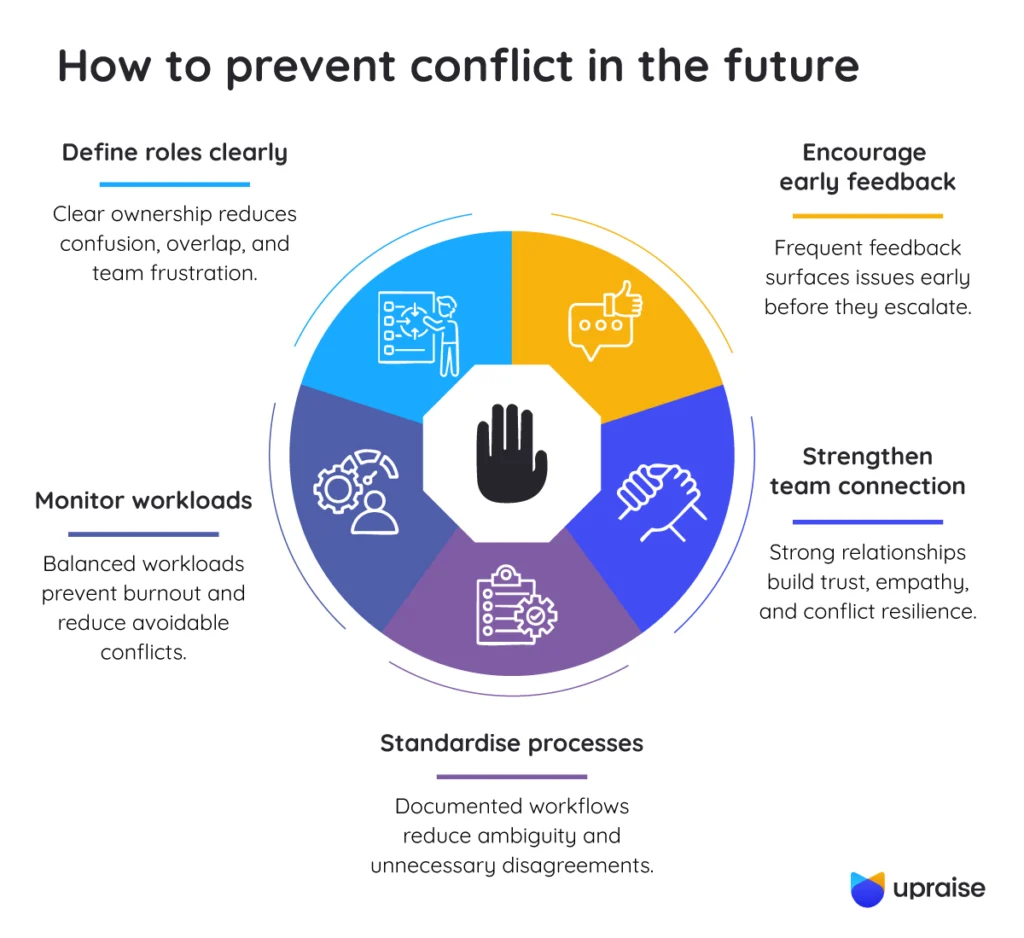
- Define roles clearly: Unclear ownership creates overlap, confusion, and frustration. Use tools to map responsibilities so everyone knows who owns what.
- Encourage early feedback: Waiting until quarterly reviews is too late. Normalize lightweight, frequent feedback. It helps surface concerns before they grow.
- Strengthen team connection: Empathy builds resilience. Support managers in hosting regular team check-ins or informal sessions, even for distributed teams. A stronger bond lowers defensiveness when issues arise.
- Standardize processes: Ambiguity invites disagreement. Whether it is sprint planning or code reviews, encourage teams to document and agree on workflows inside Jira.
- Monitor workloads: Burnout is a breeding ground for conflict. Empower managers to conduct weekly check-ins and rebalance efforts as needed. It shows care and helps reduce avoidable tension.
One Nordic gaming company implemented ongoing recognition using UpRaise for Employee Success. The result was a sixfold increase in peer-to-peer appreciation and a noticeable drop in interpersonal friction. Read the full case study.
The role of communication in resolving conflict
When tension shows up on a team, how people communicate makes all the difference. It can either defuse the situation or make it worse. For most organizations today, communication isn’t a soft skill. It’s a core function. One that directly shapes how people work together.
The data backs this up. In a 2024 report by The Harris Poll for Grammarly, 64% of business leaders said that strong communication improved team productivity. That’s not just a nice bonus. It has a real impact on how work gets done.
Now think about what happens when teams are used to honest, open conversations. Conflict doesn’t build up in silence. People speak up. They listen. They find common ground and move forward without dragging the tension behind them.
This is why communication deserves a permanent seat at the table. Not as an afterthought. Not as a soft skill to check off. But it is something organizations actively support and build into how their teams operate every day.
| Organizational benefit | Why it matters |
|---|---|
| Reduces misunderstandings | Clear messaging ensures goals, roles, and expectations are interpreted uniformly. This reduces the risk of errors and tension from misaligned assumptions. |
| Promotes accountability without blame | Objective language focuses on solutions, not blame. This encourages collaboration instead of defensiveness. |
| Builds psychological safety | Teams are more likely to share concerns or admit mistakes when they feel safe and respected, leading to earlier interventions. |
| Improves feedback loops | Regular communication across levels allows for timely, constructive feedback and prevents frustration from festering. |
If you want good communication to stick, build it into daily routines, not just team meetings or performance reviews. Here’s how:
- Train your managers well
Equip them with tools like SBI (Situation-Behavior-Impact) or Radical Candor. These frameworks help them give feedback that’s both clear and respectful. They’re not scripts. They help conversations go somewhere useful. - Make communication channels consistent: Set clear norms for where updates, concerns, and feedback should live. Whether it’s one-on-ones, standups, or project tools, consistency removes guesswork.
- Write things down: Capture key decisions and expectations in a shared space like your project management platform. That way, nothing gets lost and everyone stays aligned.
- Call out transparency when you see it: When someone raises a concern thoughtfully or helps solve a conflict, acknowledge it. That kind of behavior builds trust across the board.
- Use performance tools with purpose: Platforms like UpRaise for Employee Success help managers see trends, catch issues early, and bring data into conversations. That context changes everything.
- Look beyond the surface: If someone seems off, check their feedback history or recognition patterns. You might find insight before making assumptions.
In fast-paced environments, conflict will show up. But when communication is treated as a habit, not an afterthought, it becomes a real source of strength.
Conclusion
Conflict will happen. What hurts teams is what doesn’t get said. For any organization serious about growing its next generation of managers, the real work is helping them handle tension with clarity, empathy, and steady focus.
That starts with giving new leaders the right tools. Practical strategies for handling team conflict. A culture that values honest feedback. Tips for first-time managers. And conflict resolution systems that make it easy to spot issues before they snowball.
Because teams that know how to talk through hard things are the ones that keep showing up, getting better, and pushing forward.
If that’s the kind of culture you’re building, UpRaise can help you get there with more clarity and less chaos. Check out UpRaise to see how these tools can help you in handling team conflict with more clarity and less chaos.
FAQs
Q1: How should a first-time manager handle team conflict?
Address it early. Create space for both sides to speak and really listen. Focus on shared outcomes, not blame. Tools like UpRaise for Employee Success give managers the context they need to guide fair and confident decisions.
Q2: What are the best strategies for conflict resolution?
Stay neutral. Keep the conversation focused on the issue, not the person. Use facts when possible and involve the team in finding the path forward. That builds ownership and reduces repeat friction.
Q3: How can team conflict be prevented?
Get ahead of it. Make roles clear. Encourage regular feedback, not just once a quarter. Check workloads and make adjustments before burnout hits. Platforms like UpRaise for Employee Garrison help keep systems and expectations in sync.
Q4: Why is conflict resolution important for managers?
Because trust breaks fast and takes time to rebuild, when managers know how to deal with conflict well, teams feel safer. They also collaborate better and stay focused on the work that matters.

