


Imagine you hire promising employees and invest time and effort in training them to develop your SaaS products. Within a year, they have become critical members of your organization’s workforce. Regular check-ins and reviews show they are happy with their jobs, and your enterprise saves substantially on employee turnover costs.
According to the APA’s 2023 Work in America™ Survey, 94% of employees said that fostering a sense of belonging is crucial to workplace success. Yet, 20% still feel disconnected, and this loneliness is not just emotional. Many entrepreneurs underestimate the potential benefits of a proactive employee engagement strategy. They believe bonuses or perks are enough to keep people loyal. But engagement goes beyond benefits. It is about purpose, trust, and belonging.
This article explores the importance of employee engagement for workforce retention and covers the practical steps you can take to fix it.
What is employee engagement, and why does it matter for retention?
Employee engagement refers to ensuring your workforce is motivated and maintains a positive psychological state. Engaged employees are more likely to work harder and go the extra mile to support your organization in achieving its long-term goals.
Employee engagement can be broadly divided into two categories. Cognitive engagement refers to the stage where employees understand how their work impacts the company. Emotional engagement, as it sounds, refers to a state where employees feel a sense of belonging and purpose. Employees who lie in the intersection of these two states are naturally motivated.
Engagement does not refer to:
- Feeling happy because of perks or snacks
- Developing blind loyalty to the company
- Completing tasks without internal investment
For example, a sales associate may hit targets mechanically but feel disconnected from the company’s vision. Such employees are not engaged, and they are most likely to leave the organization once a better offer comes along.
Genuine engagement taps into the psychological need for meaning, competence, and autonomy. Positive employee engagement matters for retention because they are less likely to leave the company. This reduces turnover and its associated costs while preserving valuable institutional knowledge and improving overall company performance.
The link between employee engagement and retention
There is a direct relationship between employee engagement and retention. Your organization can improve employee retention by taking the initiative to recognize your workforce’s efforts, investing in professional development, and fostering a positive work environment.
The best practices for employee engagement are designed based on three fundamental psychological factors:
- Autonomy: Your employees feel in control of their work domain.
- Competence: Your employees feel capable and valued through regular feedback and opportunities for growth.
- Building relationships: There is a sense of belonging and your employees develop positive relationships with colleagues
When a workplace contains these factors, employees feel emotionally connected with their company’s values and are less likely to switch to a different organization.
Strategies to improve employee engagement
Employee engagement grows when people feel their work matters. In this regard, the following strategies can help you build a more engaged and loyal team.
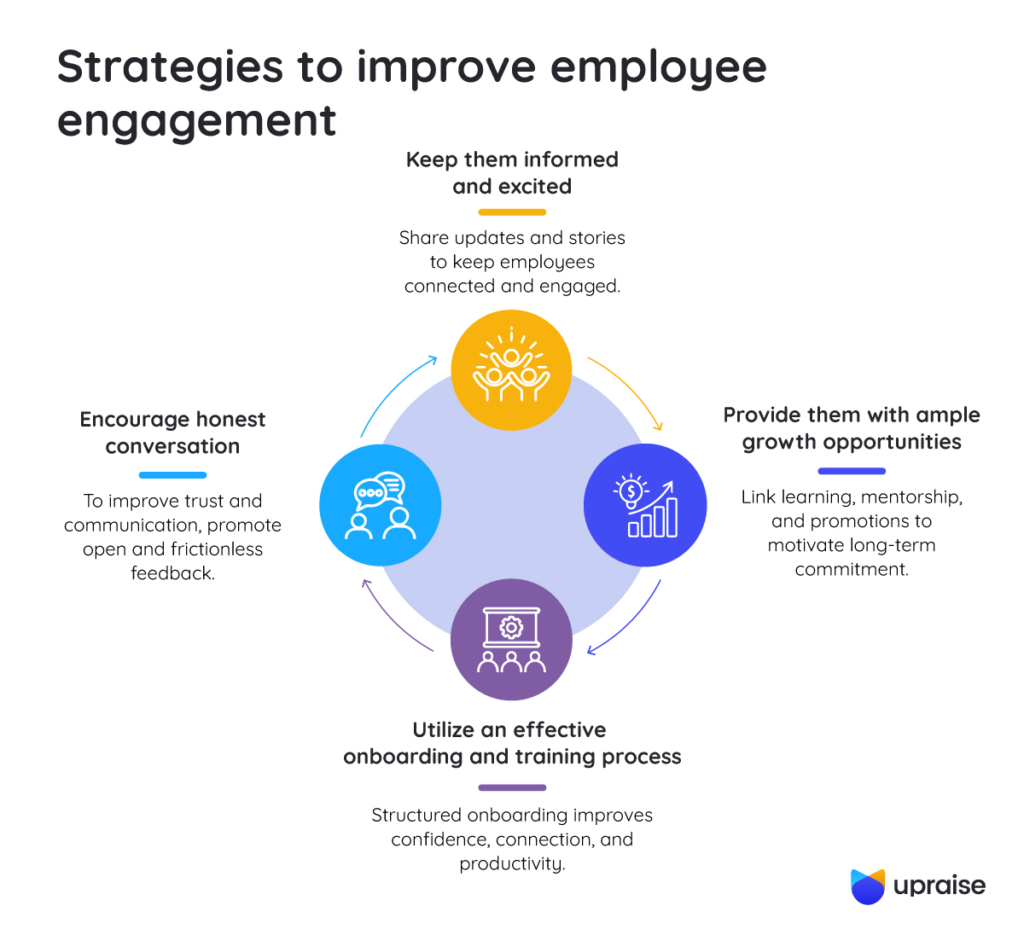
Encourage honest conversation
How often do employees at your workplace share feedback with the management with as little friction as possible? It can be formal or informal. If the frequency is very low, that means there is a lack of open communication. Start by exchanging valuable and honest feedback between employees and the management about each other’s work.
Keep them informed and excited
If there are more than 50 employees in your organization, there is a high chance that someone is always out of the loop on important information. From the CEO’s latest interview to that new product launch, everything can be an exciting topic of team discussion. Invest in keeping your people informed about such non-work-related corporate gossip, and they will feel more engaged at the workplace.
Provide them with ample growth opportunities
Employees switch organizations due to a lack of growth opportunities. Your enterprise should do its best to provide room for upward mobility for its workforce. For example, marketing executives in an SaaS company would become more motivated and engaged if they know that the organization proactively links mentorships and programs to enhance their knowledge and skills with promotions and other opportunities.
Utilize an effective onboarding and training process
The first few weeks decide how connected a new hire will feel to your company. If onboarding feels rushed or confusing, employees may quickly lose interest. For example, in a SaaS company, new customer success executives can shadow experienced teammates during live client calls to learn real communication practices. This not only builds confidence but also speeds up productivity.
Building engagement strategies is just the first step. Unless you track how these efforts affect motivation and loyalty, you’re working in the dark. The next step is to measure engagement and retention in clear, simple ways that show what’s working and what needs improvement.
How to track employee engagement and retention success?
One of the significant challenges in the workplace is to quantify the engagement level of employees and understand the scope of improvement. Your organization should utilize qualitative and quantitative metrics such as:
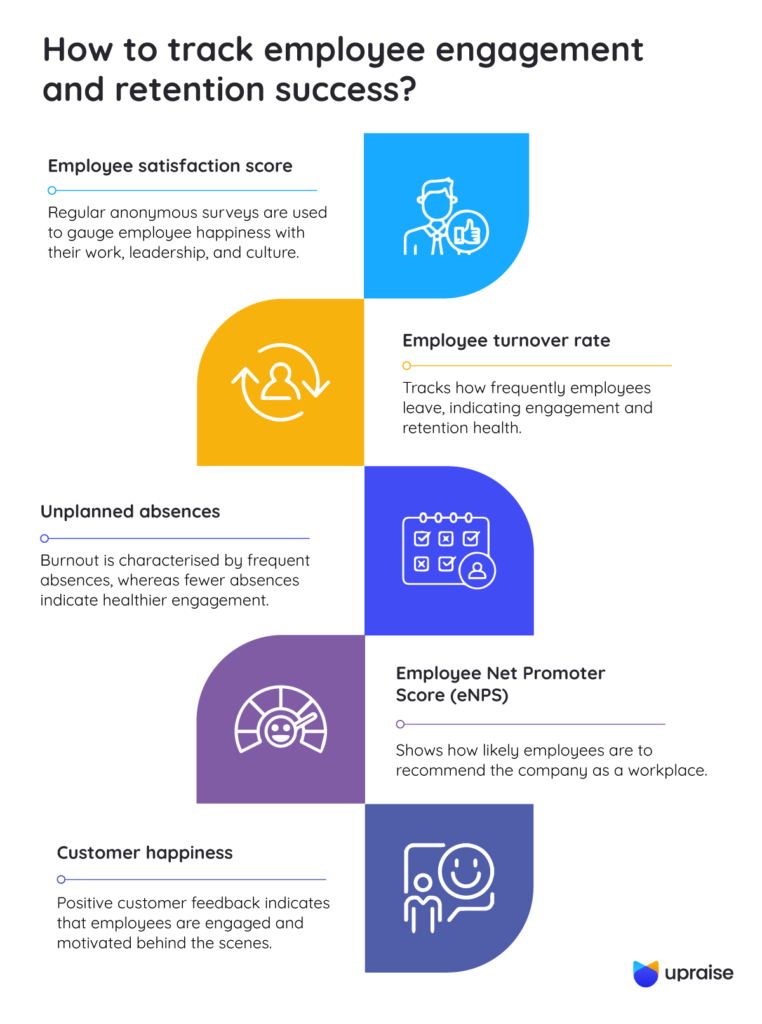
Employee satisfaction score
This score measures how satisfied employees feel about their work, the leadership at the workplace, and the company culture. Run a short anonymous survey every quarter on different aspects, like workload, leadership support, and recognition. A high score means people are happy and motivated.
Employee turnover rate
This score indicates how often people leave the organization. A steady decline in this figure is a positive sign of engagement. Some organizations also prefer to compare turnover rates across different departments to identify if any particular department needs attention.
Unplanned absences
When people skip work without notice, it’s a red flag. A lower frequency indicates there is less burnout at the workplace.
Employee Net Promoter Score (eNPS)
This metric does an honest pulse check on employee engagement. It measures how likely employees would recommend their organization as a great place to work. That’s why employee-savvy organizations work very hard on optimizing their eNPS.
Customer happiness
Run a quick customer survey to see how satisfied they are not just with your customer service. If the overall score is positive, that’s a direct indication that employees are engaged at the workplace.
To collect the data, conduct periodic manager feedback and peer reviews with innovative tools, like UpRaise for People. Use it to:
- Send automated surveys and reminders
- Compare engagement data across departments to spot patterns
- Track OKRs linked to employee retention goals
- Keep complete employee histories and performance records in one secure space
- Discuss survey findings in team meetings to promote open communication
Modern tools can neatly present actionable insights about the impact of your engagement efforts on employee performance.
Conclusion: The importance of employee engagement in retention
Employee engagement and retention are directly proportional to each other. Happy employees are likely to stay longer and contribute their best efforts to the organization. However, it requires an equal effort from the organization. Guide employees to set meaningful personal goals, help them grow their skills, and encourage them through periodic reviews. Moreover, all the efforts should be aligned towards meeting the broader objectives of the organization.
UpRaise’s suite of apps can help you manage employee goals, feedback, and performance in one place. The product tracks progress and gives you clear insights to see how engagement supports long-term success. Book a free demo and start building a happier, high-performing team.
FAQs
1. How does employee engagement affect retention rates?
Employees feel rooted to the organization when they feel their work has a purpose. It starts when they get appreciation for their efforts towards the company’s mission and vision. They develop a deep emotional and mental connection with the organization. Now, they work not for a salary but for a broader cause. That directly leads to high employee retention rates.
2. What are the best strategies to improve employee engagement?
One of the best strategies is to offer feedback about their performance at a regular interval. It can be daily, weekly, or even biweekly. Once you make them feel valued, offer them opportunities for growth to higher positions. Also, make them feel a part of the corporate family by including them in major business meetings now and then.
3. How can organizations track employee engagement and retention?
You can follow the OKR method of goal-setting framework to gauge employee engagement at the workplace easily. Break tasks into key objectives to be achieved and track the progress in real time through a continuous feedback management tool, like the UpRaise for Employee Success. Additionally, you can track turnover rates and exit interviews to take action before top talent leaves.
4. Why is it essential to focus on employee engagement for long-term retention?
When employees feel engaged at the workplace, they work for a purpose instead of a paycheck. The more they feel part of a bigger picture, the longer they are going to give 100% effort.

